
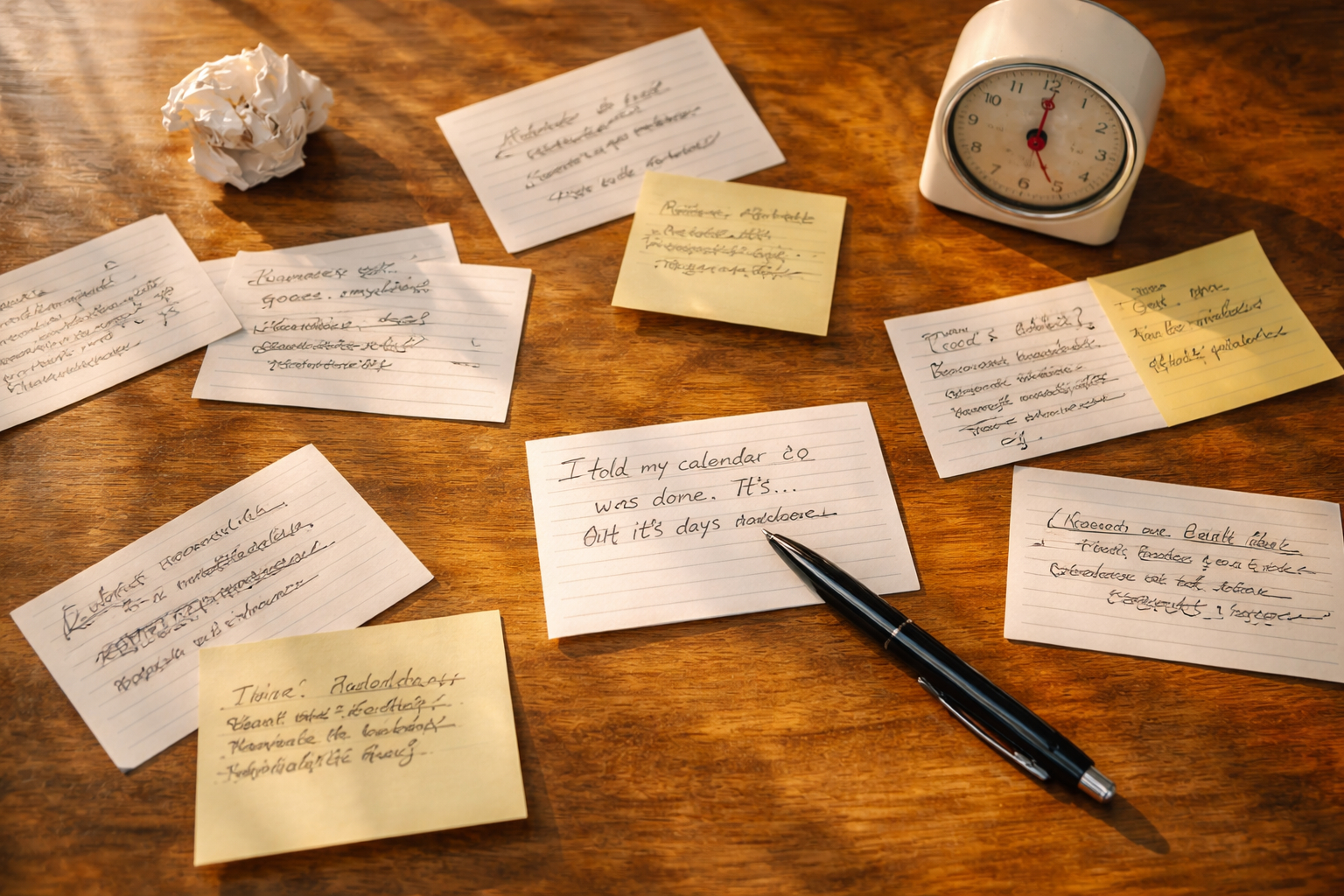
A good one-liner is a compact idea that resolves quickly and surprises the listener.
It relies on economy: every word should move the setup or the punch toward the same destination.
When crafted well, a single sentence can change the tone of a conversation or a social feed.
This article breaks down practical techniques to build, test, and deliver short jokes that land.
Why simplicity matters
Keep the structure tight to preserve momentum: excess detail dilutes the impact. A concise setup establishes context and invites a quick mental shift, which the punch exploits. Listeners process short lines faster, so clarity improves both comprehension and surprise. Aim for a clear image or association that the audience already understands.
Structure of a one-liner
Most effective one-liners follow a simple pattern: a setup that primes expectation, a pivot that reframes, and a concise punch. The setup should be minimal but specific enough to direct attention; the pivot then flips that direction in a small, clever way. You can use contrast, ambiguity, misdirection, or wordplay as the pivot mechanism. Keep syntax clean so the twist arrives without friction.
– Setup: supply only what the listener needs to picture the scenario.
– Pivot: change perspective by shifting meaning, tone, or context.
– Punch: make the payoff short, rhythmically strong, and hard to paraphrase.
Test variations of wording until the pivot feels inevitable in retrospect. Tighter phrasing typically increases laugh rate because it reduces the mental distance to the twist.
Timing and delivery
Pacing and vocal rhythm are as important as wording. A brief pause before the punch creates anticipation; rushing removes the surprise and dragging kills momentum. In writing for text or social media, line breaks and punctuation can simulate that pause. Consider audience and medium — conversational delivery allows improvisation, while posted lines need more self-contained cues.
Practice and editing
Write many small attempts and discard what feels predictable or vague. Read lines aloud, record them, and note where your attention lags or the laugh fails to come. Ask a few trusted listeners for quick reactions and refine the wording based on their first impressions. Over time you’ll build a sense for rhythm, choice of words, and when to stop editing.
Avoiding common pitfalls
Beware of forcing cleverness: a strained angle reads as awkward, not funny. Avoid relying on obscure references or inside jokes that exclude listeners. Steer clear of clichés that predict the punch; predictability neutralizes surprise. If a line needs too much explanation, simplify or abandon it.
Conclusion
One-liners reward discipline and repeated editing.
Focus on clear setup, a clever pivot, and a tight punch that respects timing.
With practice you can produce short jokes that land reliably across settings.