
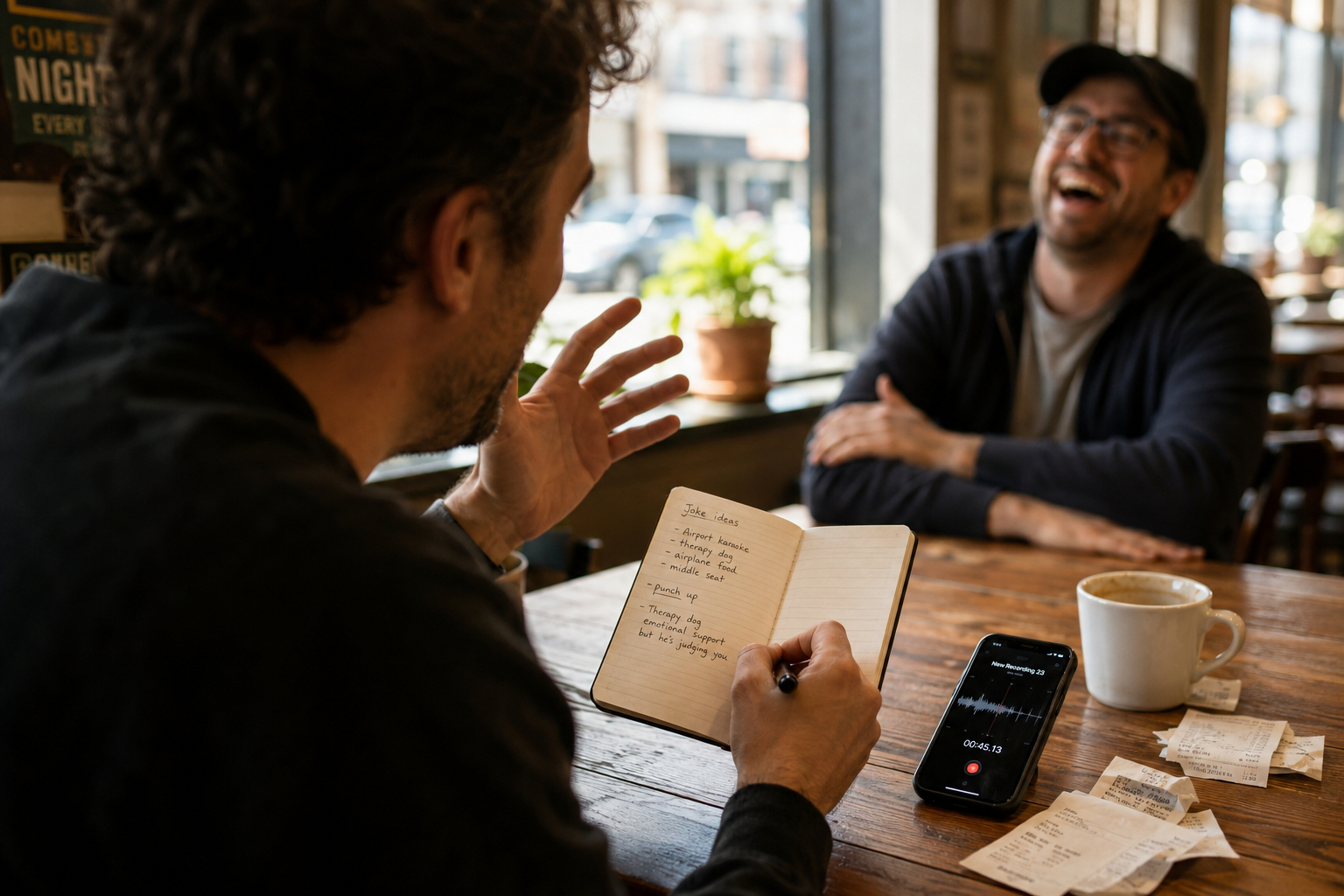
Comedy doesn’t have to come from grand ideas; most repeatable laughs begin as tiny observations you can practice. By training to notice small mismatches, odd phrasing, and everyday contradictions, you build a steady stream of material. This piece outlines simple routines to gather, test, and shape those moments into short, portable jokes you can use on stage or online. The aim is a practical, low-pressure approach that fits into a busy day.
Spotting the Small Stuff
Begin by widening what you consider noteworthy: an awkward line at a grocery store, a strangely earnest instruction manual, or a neighbor’s overly serious nod. Spend a week noting anything that makes you do a double-take, then sort entries into categories like phrasing, behavior, and contrast. Keeping a tiny notebook or phone note lets you capture the kernel before it dissolves. This habit trains your brain to prioritize potential setups over background noise.
After a few days of collecting, you’ll notice patterns that point to reliable comic beats. Group similar kernels together so you can test different punchlines against the same setup. This makes iteration faster and less random.
Short Exercises to Build Material
Set aside five to ten minutes daily for micro-writing exercises aimed at brevity and clarity. Try three-minute punchline sprints where you force one setup into five different punchlines, or constraint drills that limit you to one image, one comparison, and one twist. Record yourself delivering the lines to catch timing and cadence issues you won’t spot on paper. These short, frequent practices are more effective than occasional marathon sessions because they keep your reflex tuned.
Rotate exercises through the week to avoid getting stuck in a single mode of thinking. The variety keeps your creative muscles flexible and helps you discover what structures produce the most reliable laughs for you.
Polish Without Pressure
Once you have a handful of promising lines, refine them by removing excess words and sharpening the contrast between setup and punch. Read the line aloud, then cut anything that doesn’t increase the surprise or emotional shift. Test versions in low-stakes places: a text thread, a short social clip, or a five-minute open mic set. Feedback lets you see which edits actually land and which flatten the joke.
Accept that many kernels won’t become polished bits, and that’s useful too. Saving and revisiting scraps later often turns stale notes into fresh jokes after new life experience or perspective.
Conclusion
Small, systematic habits turn fleeting observations into usable comedy material.
Consistency and quick feedback are more powerful than occasional inspiration.
Keep collecting, testing, and trimming until the joke breathes on its own.