
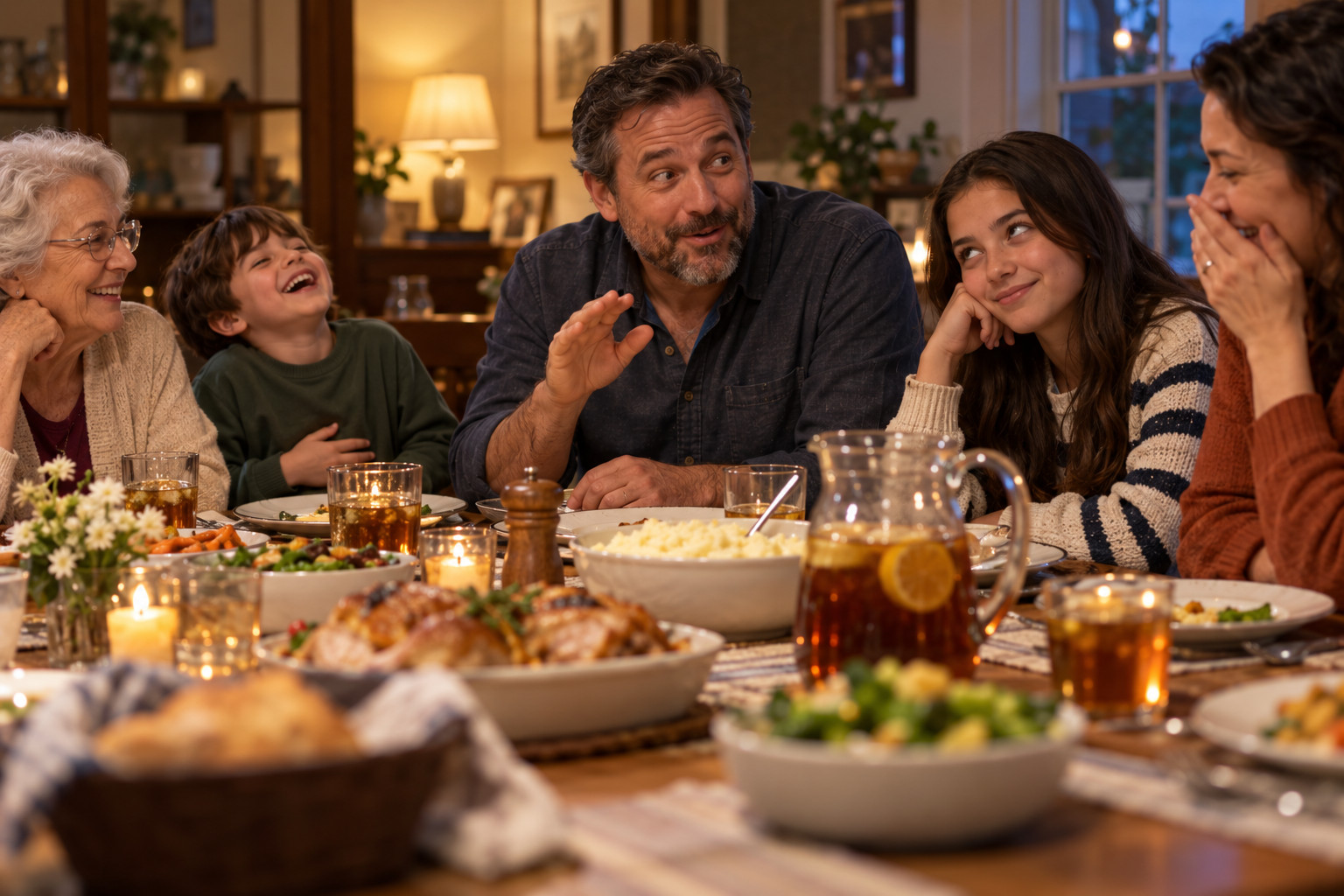
A dad joke can land with a delighted eye roll or tumble flat.
That difference usually comes down to rhythm — the tiny pause, the tone, the shared look.
This piece looks at the practical moves that make groan-worthy lines feel effortless rather than forced.
You don’t need a catalog of punchlines; you need to know when to use them.
Timing and Tone
Timing turns a one-liner into a memorable moment rather than an awkward interruption.
A short pause before the punchline gives listeners a beat to expect and then enjoy the surprise.
Tone steers the reaction: warm, self-aware delivery invites laughter; a blunt shout risks eye rolls.
Aim for a relaxed cadence so the joke feels like a shared wink, not a performance.
Practice the pause at home until it feels natural and unobtrusive.
Small adjustments in volume and speed often make the biggest difference.
Reading the Room
Context matters more than cleverness — who you’re with and what just happened will shape the response.
If people are stressed or focused, save the quips for a lighter moment when attention is easier to catch.
Consider age and inside jokes: a line that delights one generation may need a tweak for another.
Watching facial cues and brief silences will tell you whether to proceed or pivot.
When in doubt, choose humility: a self-directed groaner lowers the stakes and invites shared amusement.
Accepting a gentle groan keeps the atmosphere friendly rather than competitive.
Practical Delivery Tips
Keep jokes short and spare; long setups dilute the payoff and make timing awkward.
Use eye contact or a smile to connect the setup and the punchline so listeners feel included.
Let silence do some of the work — the pause is often the point where anticipation becomes laughter.
If a joke flops, move on with lightness; resilience turns a miss into a smoother next attempt.
- Trim setups to one or two lines.
- Match loudness to the moment — softer for intimate groups, louder for noisy rooms.
- Welcome groans as part of the routine rather than a failure.
With modest practice these moves become instinctive and easy to adapt.
That effortless feel is the real payoff: jokes that land without feeling rehearsed.
Conclusion
Small shifts in timing and tone turn corny lines into shared moments of levity.
Watch the room, keep it light, and let the pause work for you.
A well-timed dad joke is less about the line and more about the rhythm you create together.