
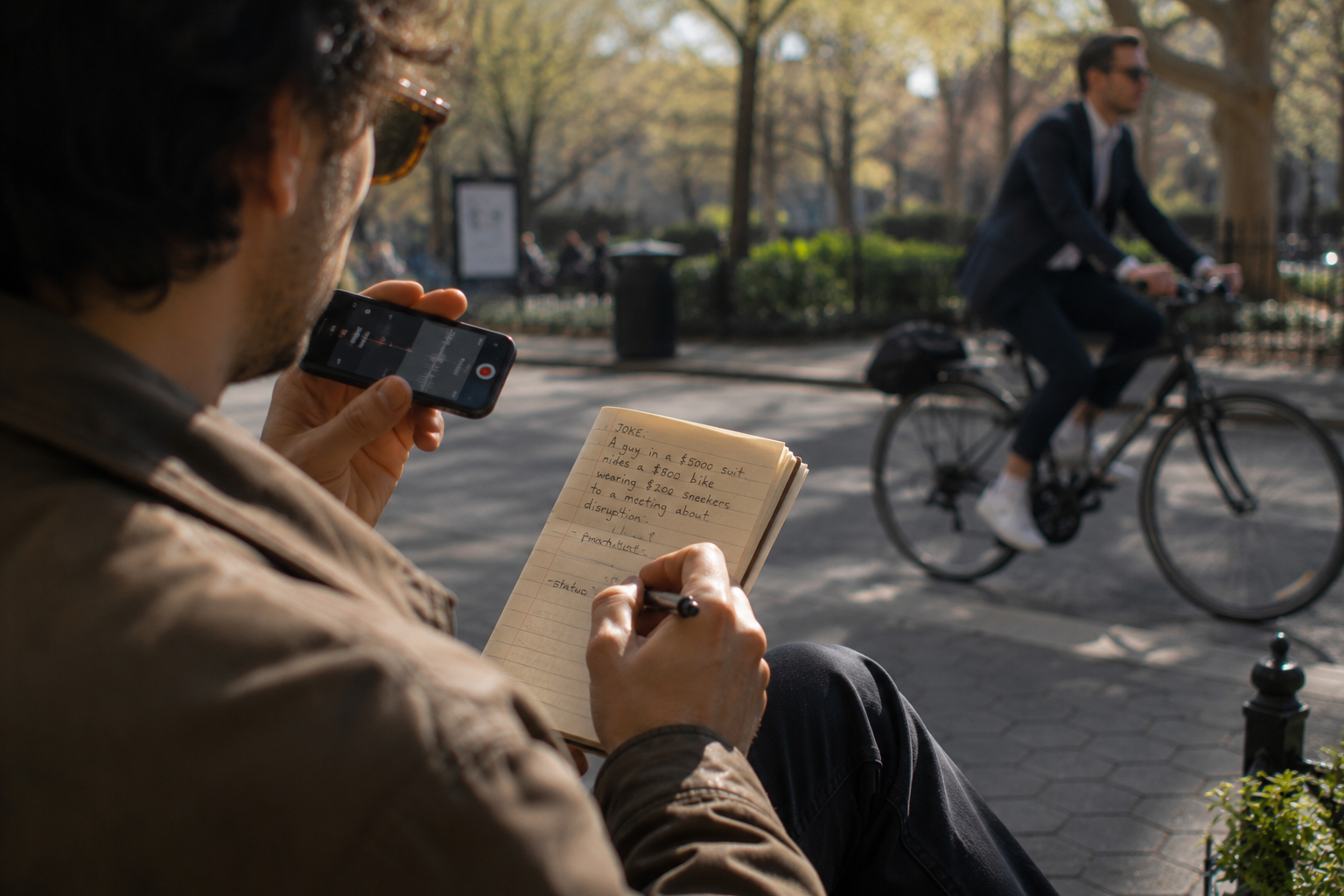
Every day hands us tiny mismatches between expectation and reality that can become the seed of a joke. Learning how to spot and record those moments makes short-form comedy reliable rather than accidental. This piece offers practical steps to notice, shape, and file small surprises so you can turn them into quick, repeatable bits. If you make these approaches habitual, your material bank will grow without forcing inspiration.
Spotting the Unexpected
Start by training attention: look for moments where something nearly ordinary diverges in a small but meaningful way. Pay special attention to miscommunications, weird phrasing, and physical details that contradict a context. Listen for the one word that feels off or watch for an action that seems out of sync with the setting. These small mismatches are the natural setups that invite jokes without needing elaborate premises.
When you catch a moment, jot a one-line note immediately. Short tags help you come back later and recognize patterns across days.
Shaping Observation into Setup and Punch
Once you’ve recorded an observation, distill it: identify the setup, the expectation, and the twist that breaks that expectation. Keep setups tight and concrete so the audience can picture the scene quickly. Aim for a single clear image or feeling as your setup, then find the smallest, sharpest pivot for the punchline. Remember that specificity often reads as truth, and truth enhances the comedic surprise.
- Ask: What did you expect?
- Ask: What actually happened?
- Find the smallest inconsistency between the two.
Practice rewriting the note into one or two possible punchlines, then test them aloud. Hearing a line can reveal rhythm problems or stronger directions to take the joke.
Daily Habits to Keep Material Flowing
Make capturing and shaping a short daily ritual: a two-minute morning review and a three-minute evening capture session can be enough. Commit to maintaining a simple searchable file so ideas don’t get lost in long lists. Periodically curate: move promising notes into a “try” list for quick performance or recording.
Small, consistent effort beats sporadic long sessions. By treating everyday surprise as raw material, you steadily build a reliable pipeline of short comedy bits ready for sharing or refining.
Conclusion
Small surprises are everywhere if you train yourself to notice and record them. Shape each observation into a tight setup and a sharp twist, and keep a short daily habit to review ideas. Over time those tiny captures will become a steady source of quick, punchy comedy.