
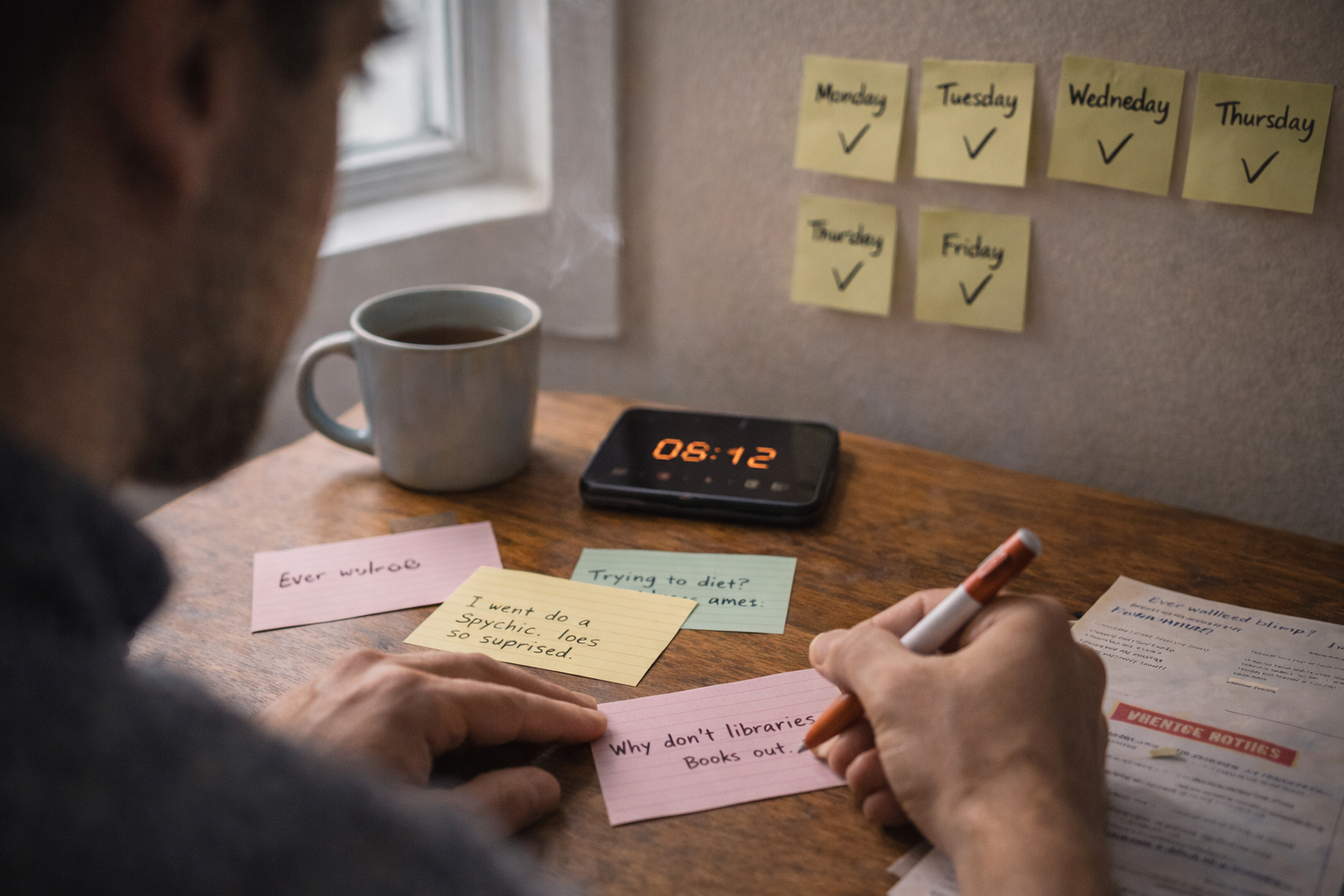
Short-form comedy thrives on clarity, surprise, and a tiny bit of truth. Practicing with daily prompts gives creators a fast track to noticing rhythms and punchlines in ordinary moments. This article offers simple exercises and a workflow to turn observations into quick, shareable jokes. Use these techniques to build a reliable habit without spending hours each day.
Consistent practice sharpens instincts and uncovers personal comedic voice. Keep the exercises light and manageable so they fit into busy days.
Why short-form prompts work
Short prompts force constraints that often spark originality, because limits encourage composers to choose precise language and surprising angles. They help you isolate a single gag or image, making it easier to test on an audience or social feed. Over time, completing many small pieces trains you to recognize patterns and recurring comic beats in life. Prompts also lower the barrier to starting, which is often the biggest creative hurdle.
Working within constraints also exposes which instincts are strongest and which need refinement. The goal is to produce volume, not perfection, and to iterate quickly.
Five practical prompts
Use these quick prompts to generate multiple bits in a short session; try spending five minutes on each. They are designed to highlight contrast, reversal, exaggeration, and voice—core engines of humor. Rotate prompts weekly to keep material fresh and to reveal your natural comedic tendencies.
- Describe a mundane task as if it were a dramatic adventure.
- Pair two unrelated objects and imagine their conversation.
- Rewrite a common complaint as an unexpected compliment.
- Take a literal interpretation of a figure of speech and detail the consequences.
- Turn a personal micro-failure into a triumphant announcement.
After drafting, pick the strongest line and refine it for timing and rhythm. Repeat the process to build a library of small, testable jokes.
Turning prompts into shareable bits
Once you have a few promising lines, focus on delivery, brevity, and framing for the platform you plan to use. Trim unnecessary words, emphasize the surprise, and consider a punchier setup to heighten payoff. Test different openings and endings to discover what lands with friends or followers. Tracking which formats perform best helps refine future prompt selection.
Allow failed experiments; they teach more than polished hits. Treat audience feedback as data, not judgment, and adapt steadily.
Conclusion
Daily prompts are a practical way to build comedic instincts and a portfolio of short bits. Regular, focused practice produces sharper setups and cleaner punchlines. Start small, iterate often, and celebrate the tiny wins along the way.