
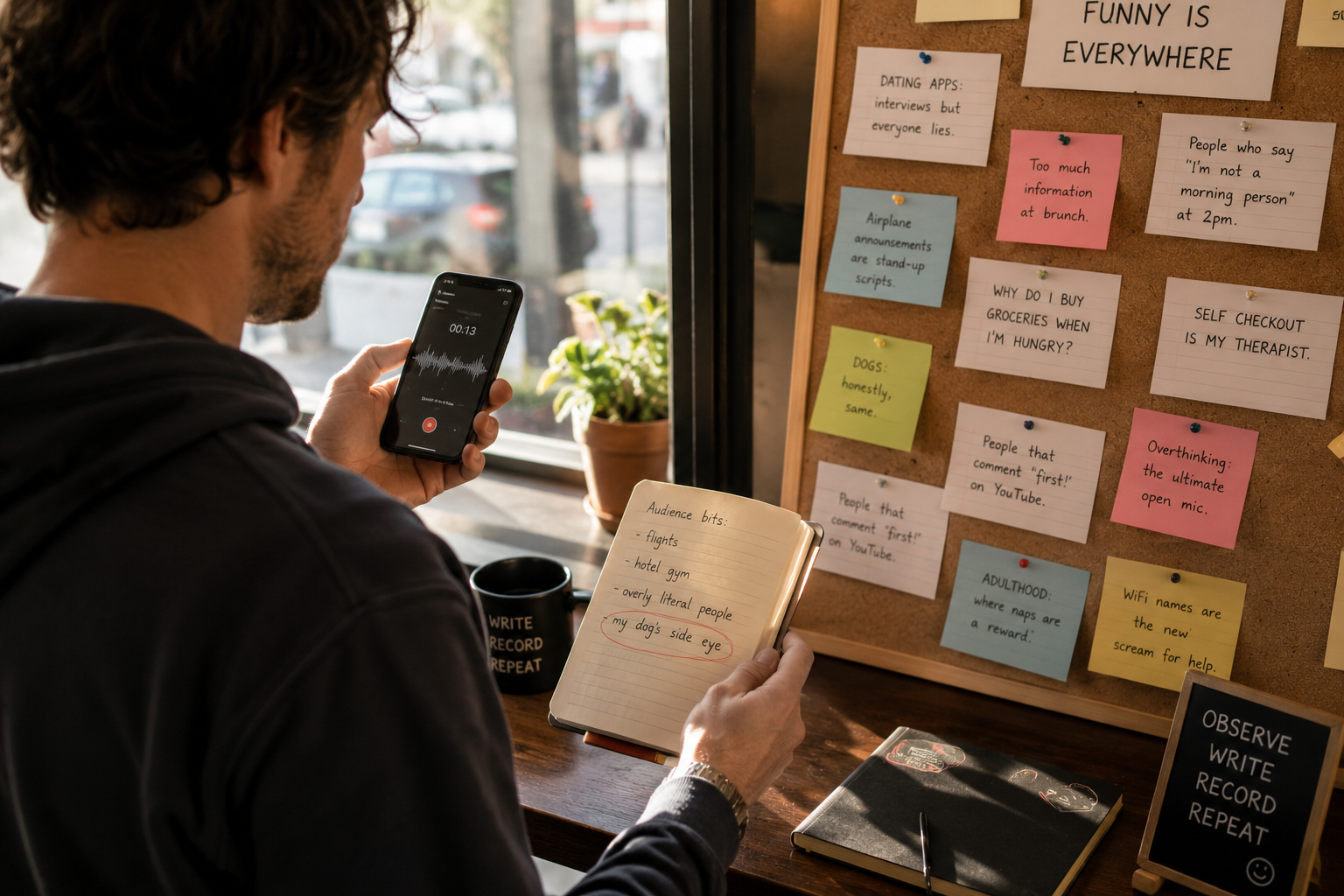
Building a consistent habit for noticing humor turns ordinary days into a steady stream of material. It starts with small routines that make observation, recording, and editing part of your flow. This article lays out practical systems to capture those fleeting comedic sparks and shape them into shareable bits. Use these steps to make noticing funny moments as automatic as checking your messages.
Setting a simple capture routine
The first step is a reliable capture method you actually use, whether a notes app, voice memo, or pocket notebook. Choose one primary tool so you avoid decision fatigue and develop a muscle memory for documenting ideas. Keep entries brief: a line, a fragment of dialogue, or the emotional reaction that made the moment funny. Time-stamp and tag entries with quick labels to make later retrieval much faster. Make a habit of reviewing new entries once a week to spot recurring themes.
This lean system helps you collect more material without interrupting your day. Over time the habit becomes nearly automatic and yields a growing backlog to mine.
Prompts and micro-practices to sharpen your eye
Setting mini-prompts turns passive observation into active comedy hunting, such as spotting contradictions or odd specificity in conversations. Try a five-minute prompt each morning: rewrite a headline as a punchline or make three alternative endings to a mundane interaction. These micro-practices train you to see patterns and exaggeratable details that make jokes land. Consistent, short exercises beat sporadic marathon writing sessions for developing quick wit. Rotate prompts weekly to challenge different observational muscles and keep practice fresh.
Keep prompts short so they fit into busy schedules and feel achievable. When prompts are bite-sized, they reliably sharpen your instinct without burning out.
Editing and turning captures into performable bits
Turning a note into a performable line means clarifying the setup and finding a precise punch. Ask which word or image supplies the surprise, then strip anything that blunts it. Test variations aloud, timing beats and pauses, and mark the strongest phrasing in your capture tool. Save multiple versions and flag the ones that get a physical reaction during testing. Pair edits with a quick performance test, even if only to yourself, to hear what works.
A steady edit routine turns raw observations into tight, repeatable material. Consistent revision makes it easy to pull out polished bits when you need them.
Conclusion
Building systems to catch and refine spontaneous humor requires modest routines practiced regularly. The payoff is a dependable pipeline of short bits you can perform or share. Start small, stay consistent, and let the habit do the heavy lifting.