
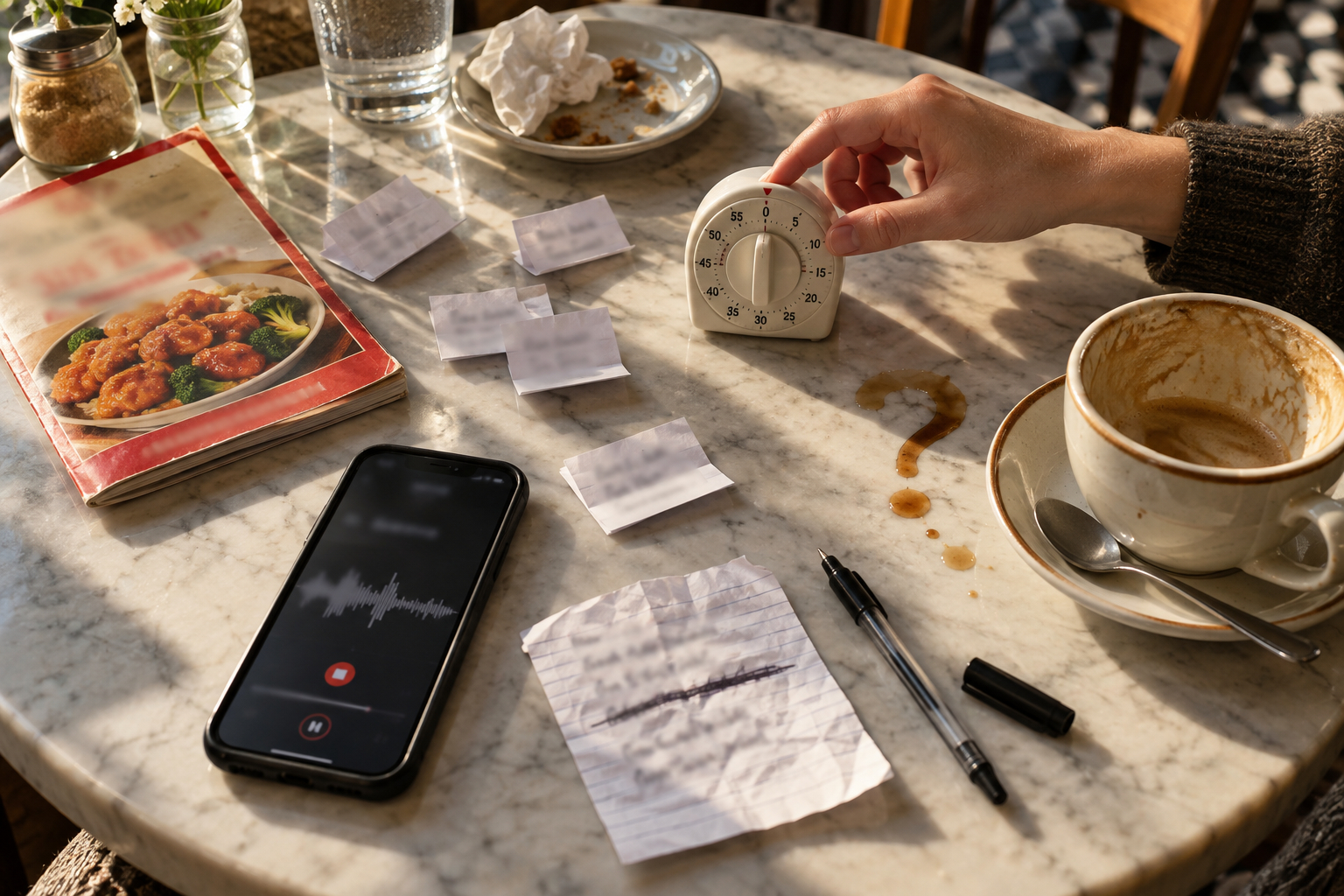
Small, unexpected glitches—an awkward pause, a misread label, a coffee splatter—are comedy gold if you notice them. They ask the audience a tiny question, and the answer is usually a quick, surprising twist. The trick isn’t searching for grand setups; it’s learning how to spot that half-second wobble and turn it into a clear, tight line. With a few short practices you can train your ear and pen to capture these moments before they vanish. This short toolkit focuses on simple exercises and quick polishing tips to make those micro-moments land.
Why small glitches make big laughs
Micro-glitches compress setup and punchline into a package your brain decodes almost instantly. Because the setup is familiar — a storefront sign, an automated voice, a casual text — the surprise feels both believable and sharp. They work particularly well in short-form comedy because you can deliver the whole idea in a breath. The risk is overexplaining; keep the image concrete and let the oddity do the heavy lifting.
When you recognize the pattern, you start seeing dozens of potential jokes in normal life. The goal is to capture and condense, not to expand into a long scene.
Three quick exercises you can try
Spend five minutes each day cataloguing tiny mismatches: a menu item that contradicts its photo, a sign missing a letter, or a polite automated reply that feels passive-aggressive. Try rewriting each observation into a single sentence that ends with a twist — that becomes a prototype punchline. Record yourself saying the line once and listen for where the rhythm trips or the punch needs tightening.
- List mismatches: write the oddity and one surprising comparison.
- Flip expectations: state the obvious, then immediately contradict it.
- Timing drills: pause before the last word to see if the audience fills the gap.
These drills sharpen both your noticing and your phrasing in small chunks of time. Even a single successful punchline is a tool you can reuse and reshape later.
Polish quickly and share
When you have a promising line, trim any extra words until the image snaps into focus. Test it aloud to friends or post it in a low-stakes space and watch which version gets the cleanest reaction. Keep alternate endings; sometimes swapping the last verb or noun gives a sharper surprise. If a line depends on a specific detail, make sure that detail is common enough for listeners to recognize without explanation.
Don’t overproduce; a small, well-timed delivery often outperforms a heavily revised bit. The easier you make sharing, the more chances the line has to land and evolve.
Conclusion
Start treating glitches as raw material: collect, condense, and test. With short, repeated exercises you’ll build a pocket library of quick jokes. Keep them brief, keep them visible, and let the oddities do the work.