
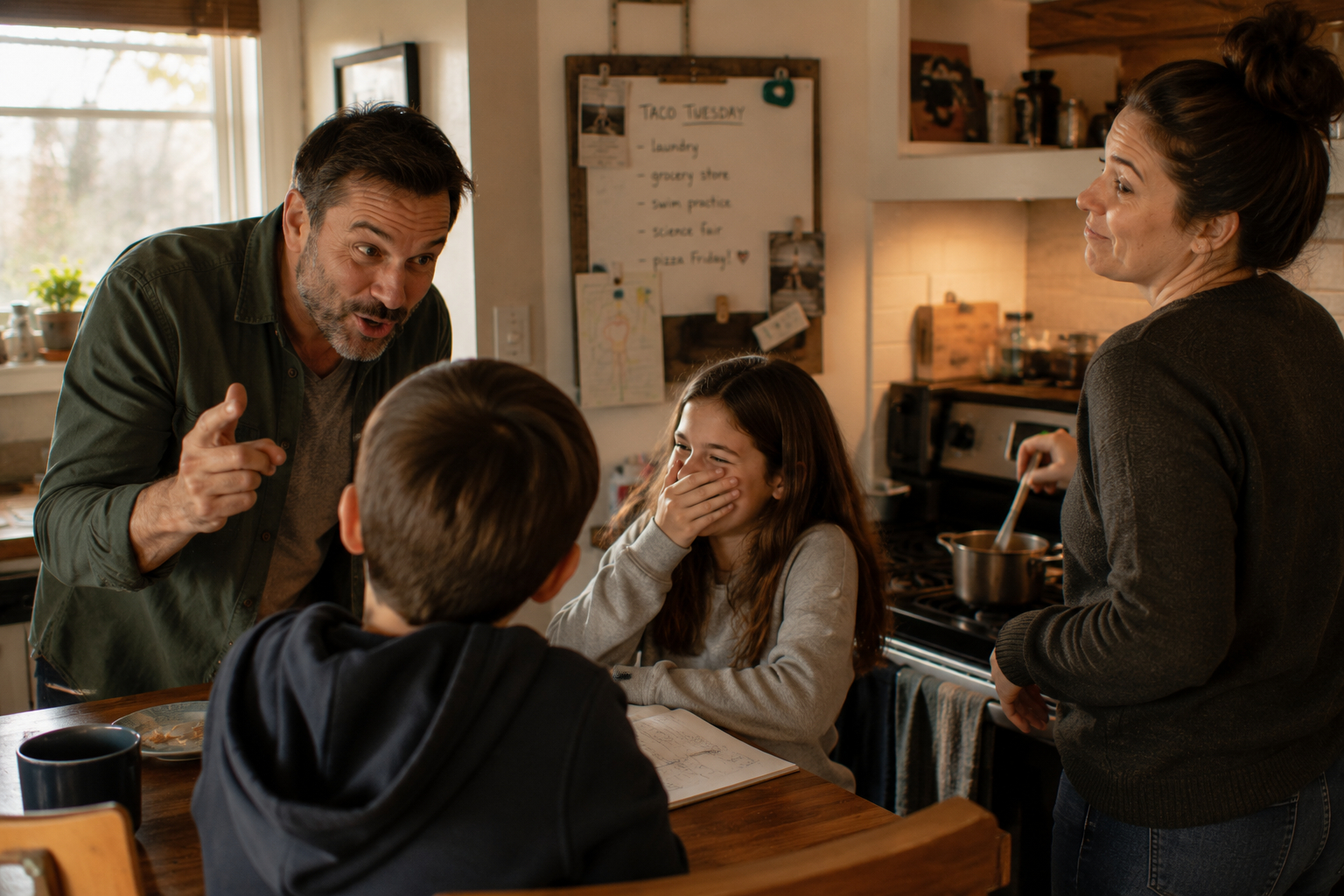
Dad jokes are a small, dependable tool for softening the edges of everyday life. A brief, corny line can break tension and invite a shared smile without demanding attention or preparation. When used with warmth and timing, these quips become a low-effort way to check in and lighten the mood. This piece outlines why they work and how to share them in ways that feel natural and inclusive.
Why a Simple Pun Lands
Humor built around puns and gentle absurdity taps into cognitive surprise: the brain recognizes an unexpected connection, then rewards the moment with a laugh. Dad jokes are often predictable enough to be safe and surprising enough to register as playful, which makes them broadly accessible across ages. That accessibility is useful in family settings where members have different tastes and attention spans. In short, the structure of a dad joke is designed to be quick, repeatable, and low-risk.
Because these jokes rarely target anyone, they avoid escalation and keep the tone light. They work best when delivered with an inviting smile rather than an aggressive punchline. Over time, a pattern of light humor can create a warm, familiar atmosphere in which people feel more comfortable sharing. Little rituals around quips can also become a touchpoint for connection.
How to Deliver a Quip Without Forced Comedy
Timing and attitude make a bigger difference than cleverness alone. Aim for moments when tension is low or when someone could use a small mood shift—during chores, at the dinner table, or on a short drive. Keep the delivery relaxed; the goal is to offer an affectionate nudge, not to perform. If a line flops, acknowledge it with good humor and move on rather than doubling down.
Pay attention to the room and adjust: younger kids often enjoy the simplest wordplay, while teens may prefer ironic self-awareness. Rotating who supplies the joke—encouraging kids to invent their own—turns the habit into a participatory game rather than a one-person routine. That shared involvement multiplies the value of each quick quip.
Examples, Prompts, and Starter Lines
Having a small mental list of safe, family-friendly lines makes it easier to drop a quip naturally. Choose themes tied to everyday activities to keep jokes relevant and spontaneous. Use prompts to invite participation: ask for a pun about breakfast, or challenge someone to invent a rhyming one-liner. Playful constraints help creativity and keep the practice fresh for everyone.
- Starter: “I’m reading a book about anti-gravity—it’s impossible to put down.”
- Prompt: “Give me a two-word pun about socks.”
- Activity: Quick pun round during car rides.
Rotating starters and prompts keeps the habit from becoming stale and encourages family members to contribute. These small practices help establish humor as a shared language rather than a single person’s act.
Conclusion
Quick, gentle quips are a practical way to create daily warmth and shared amusement. When delivered with lightness and invited participation, dad jokes become a connective habit. Keep them simple, inclusive, and timely to make the most of these small moments.