
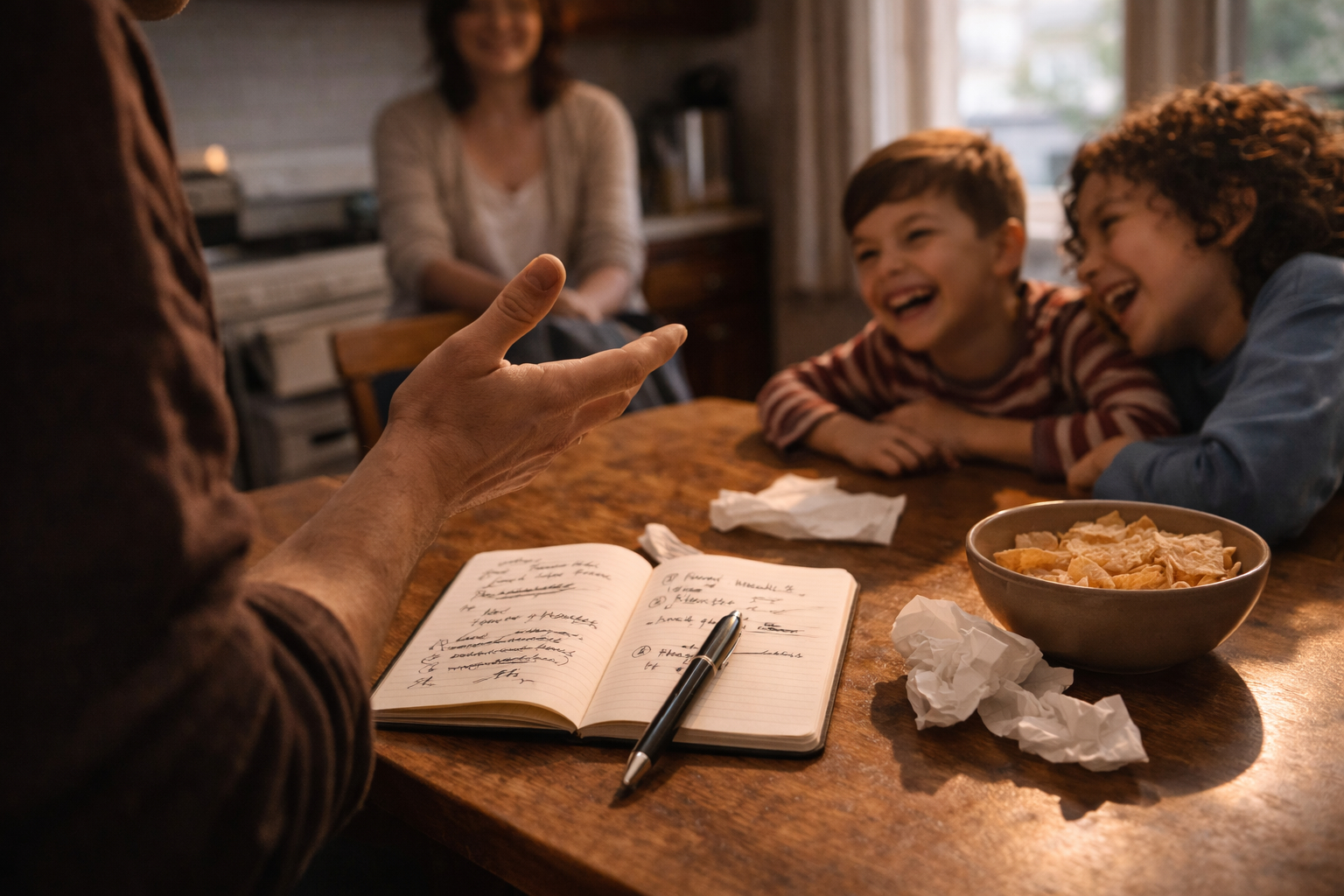
Dad jokes are short, predictable, and often intentionally cheesy, yet they play an outsized role in everyday family life.
They require little setup and invite quick, shared reactions that bridge ages and moods.
This article looks at how these simple one-liners create connection, teach timing, and invite laughter that’s as much about togetherness as the joke itself.
The surprise of the short punchline
A great dad joke often lands because it is brief and defies expectation with a harmless twist. These jokes tend to pivot on a single word or a familiar phrase, creating a tiny surprise that prompts an immediate reaction. The brevity also makes them easy to repeat and adapt, which is why variations spread quickly around a table or through a group chat. Over time those small moments stack up into a repertoire that family members recognize and anticipate.
Timing and delivery
Delivery turns a simple line into a memorable moment, and timing is the subtle craft behind most successful groaners. A pause before the punchline, a raised eyebrow, or a deliberately deadpan tone can all amplify the effect without needing elaborate setup. Importantly, the intent behind the delivery matters: when jokes are offered to amuse rather than embarrass, they keep the mood inclusive. That shared sense of play is what makes timing feel warm rather than awkward.
Building gentle traditions
Dad jokes become rituals when they are repeated in consistent contexts, like car rides, holiday dinners, or bedtime routines. Those predictable settings allow a family to anticipate the joke and enjoy the reaction more than the content itself. Short formats encourage participation from younger family members, who can try their own lines and feel part of the exchange.
– Use light call-and-response cues to invite participation.
– Keep the humor age-appropriate so everyone feels included.
– Turn recurring jokes into playful rewards or gentle running gags.
These small habits reinforce a safe, playful environment where humor serves as connective tissue rather than critique. When the tradition is gentle, it fosters belonging and shared memories across years.
When to keep it light
While dad jokes are intended to be harmless, sensitivity to tone and context matters; what’s funny at breakfast might fall flat during a serious conversation. Observing the room and choosing moments for levity helps maintain respect and avoids unintentionally downplaying others’ feelings. Encouraging everyone to contribute and to laugh at themselves keeps the humor democratic instead of directed. In that spirit, the best groan-worthy lines are those that invite a collective smile rather than single someone out.
Conclusion
Simple, well-timed one-liners function as more than quick laughs; they act as small rituals of connection.
When delivered kindly and in the right moment, dad jokes help families create a shared language of warmth and play.
They prove that the smallest, silliest moments often become the most lasting.