
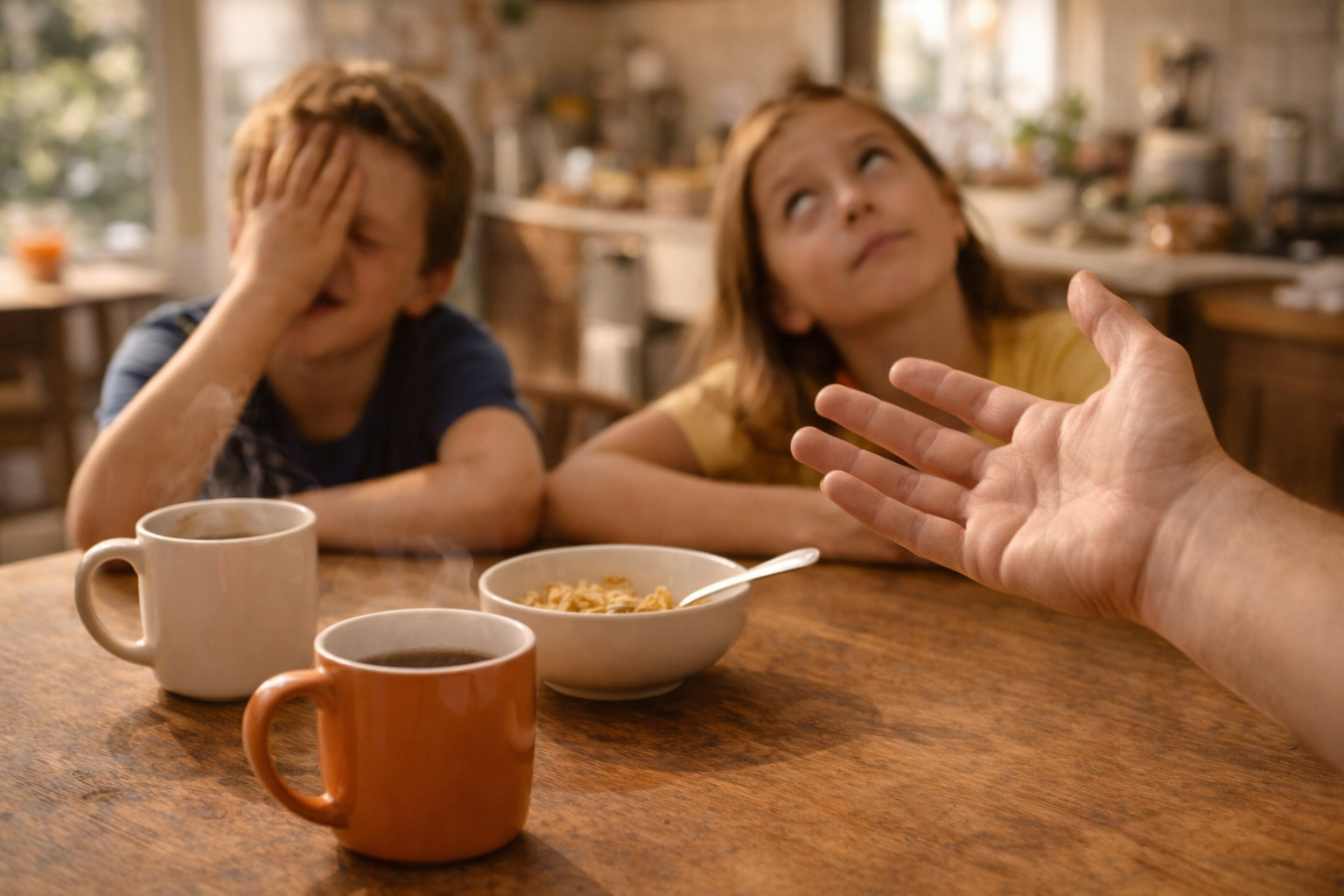
Dad jokes are short, simple lines that often land more as a smirk than a full laugh. They rely on familiar patterns, a playful twist, and an expectation of groans that becomes part of the fun. Because they are low stakes and broadly accessible, they turn ordinary moments into small, repeatable rituals. Over time those rituals create shared language and lighthearted memories within families and friend groups.
What gives dad jokes their staying power
A key strength of dad jokes is their predictability paired with an unexpected pivot. The setup feels ordinary and safe, then the punchline flips meaning just enough to surprise without offending. That mild surprise triggers a small cognitive reward and a social cue to respond, whether with a laugh, an eye roll, or a playful groan.
These jokes are portable and teachable: they travel easily between phones, dinner tables, and playgrounds because they don’t require context or specialized knowledge.
A predictable structure also lowers performance pressure, encouraging anyone to try joking and join a shared humor practice.
Timing, set-up, and delivery
Delivery matters more than complexity; the right pause or tone turns a simple pun into a memorable moment. A measured setup builds anticipation, and a tiny beat before the punchline amplifies the effect without needing elaborate writing.
– Use short setups that point toward an obvious meaning then subvert it.
– Employ pauses and facial cues to invite a reaction from listeners.
– Repeat favorite lines in different contexts to build an inside joke vocabulary.
When jokes become familiar, the audience often participates in expecting the joke, which strengthens group cohesion and makes repetition part of the pleasure.
Rituals that turn groans into connection
Dad-joke rituals are small, repeatable interactions that mark time and relationship. Whether it’s a morning pun before coffee or a corny sign-off at bedtime, these moments map out a predictable pattern of play between people.
– Encourage participation by inviting others to respond or one-up a line.
– Keep the environment light so even failed jokes are met with warmth.
Shared groans and predictable humor create a language of belonging; over months and years those tiny exchanges accumulate into family lore and easy companionship.
These rituals are less about the jokes themselves and more about the invitation to be present, playful, and forgiving together.
Conclusion
Dad jokes work because they are inclusive, low-risk ways to connect and play with language.
Small, repeatable rituals built around predictable humor create shared moments that last beyond the punchline.
In many households, the groan is simply another sign that everyone is comfortable being a little silly together.