
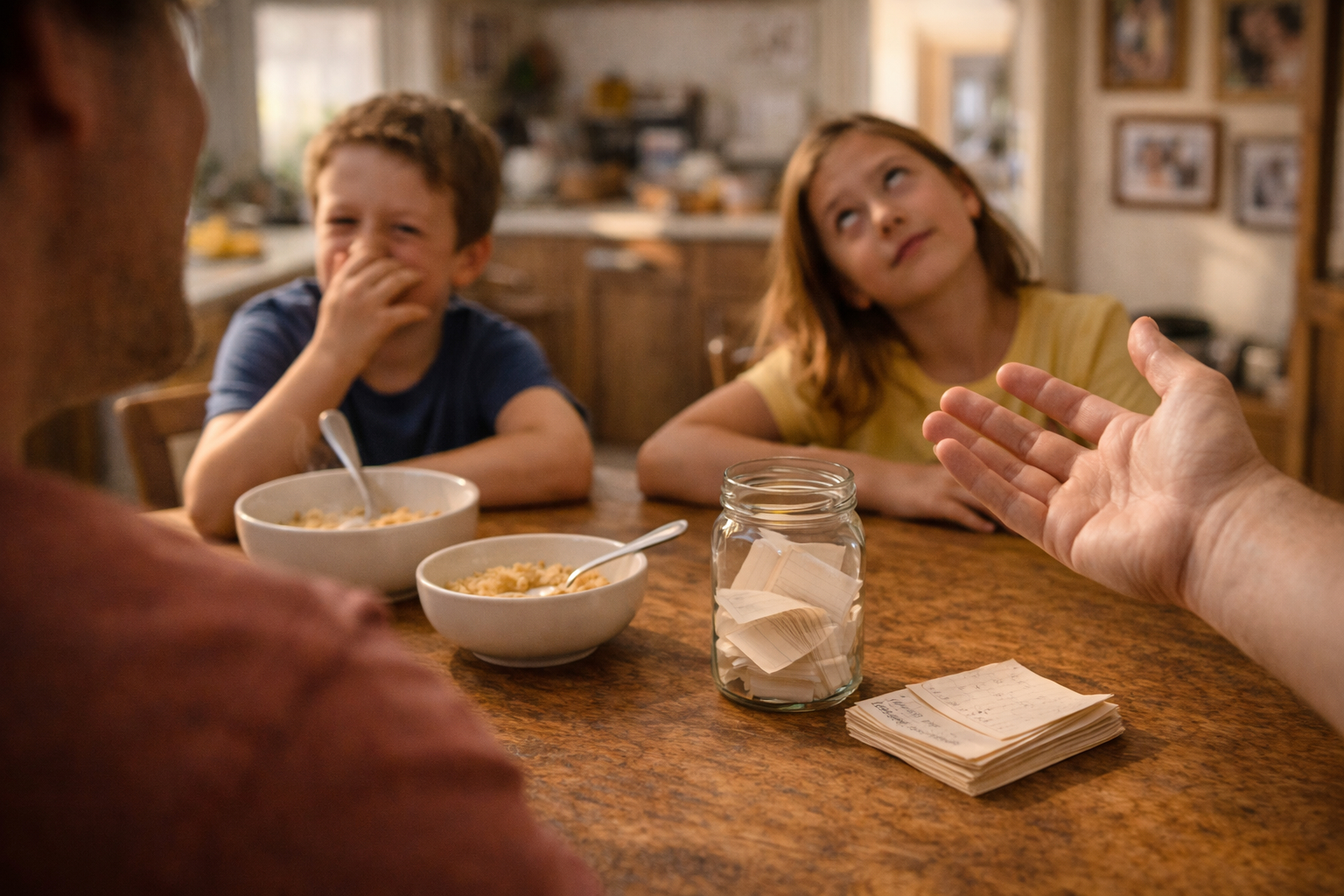
Dad jokes are brief, often cheesy puns that manage to cut through daily noise with a predictable beat.
They provoke eye-rolls and groans, but also brief, shared laughter that anchors family moments.
Over time the repetition of certain lines and delivery styles can turn one-off quips into rituals.
This piece explores why those groan-worthy puns persist and how they help build connection at home.
Why a Groan Feels Like a Shared Smile
A well-timed dad joke often lands because it lowers expectations and invites a low-stakes response. Its predictability makes it easy for everyone to participate: listeners know when to groan, smile, or roll their eyes. That shared reaction becomes a quick, repeatable social cue that signals familiarity and comfort. In many households the joke itself matters less than the moment it creates.
– Predictable structure: short setup and punchline that anyone can follow.
– Safe content: nonconfrontational humor that rarely offends.
These features make dad jokes an accessible way to create small, regular interactions that keep people engaged without pressure.
How Repetition Turns Lines Into Rituals
Rituals are built from repetition, timing, and consistent roles, and dad jokes check those boxes neatly. When a particular pun appears around the same event — at breakfast, before bedtime, or during a weekly drive — it becomes a marker for that situation. The teller often takes on a playful role and others come to expect the interruption, which reinforces the pattern. Over months or years the joke becomes shorthand for those moments, evoking memory as much as humor.
– Location cues: certain jokes tied to places or routines.
– Character cues: the same person delivering the line becomes part of the ritual.
This habitual use of humor helps families create inside signals and lighthearted continuity across changing schedules.
Using Dad Jokes to Strengthen Everyday Bonds
Intentionality makes a difference: a joke offered with warmth and timing can soothe tension or punctuate joy. While content is simple, the delivery—tone, pause, and eye contact—determines whether it lands as a bonding moment or a flat line. Encouraging everyone to add their own one-liners can democratize the ritual and invite creativity from all ages. It’s a low-effort, low-risk way to increase positive interactions across the day.
– Invite variations: rotate who tells the joke to keep it fresh.
– Create callbacks: reference older jokes to build shared history.
These small practices keep the ritual alive and make humor a sustainable thread in daily life.
Conclusion
Dad jokes persist because they are easy to give and easy to receive, creating tiny predictable moments of connection. When repeated with warmth and timing they become rituals that tie routines together and cue fond memories. Embracing these light moments can subtly strengthen family bonds without much effort.