
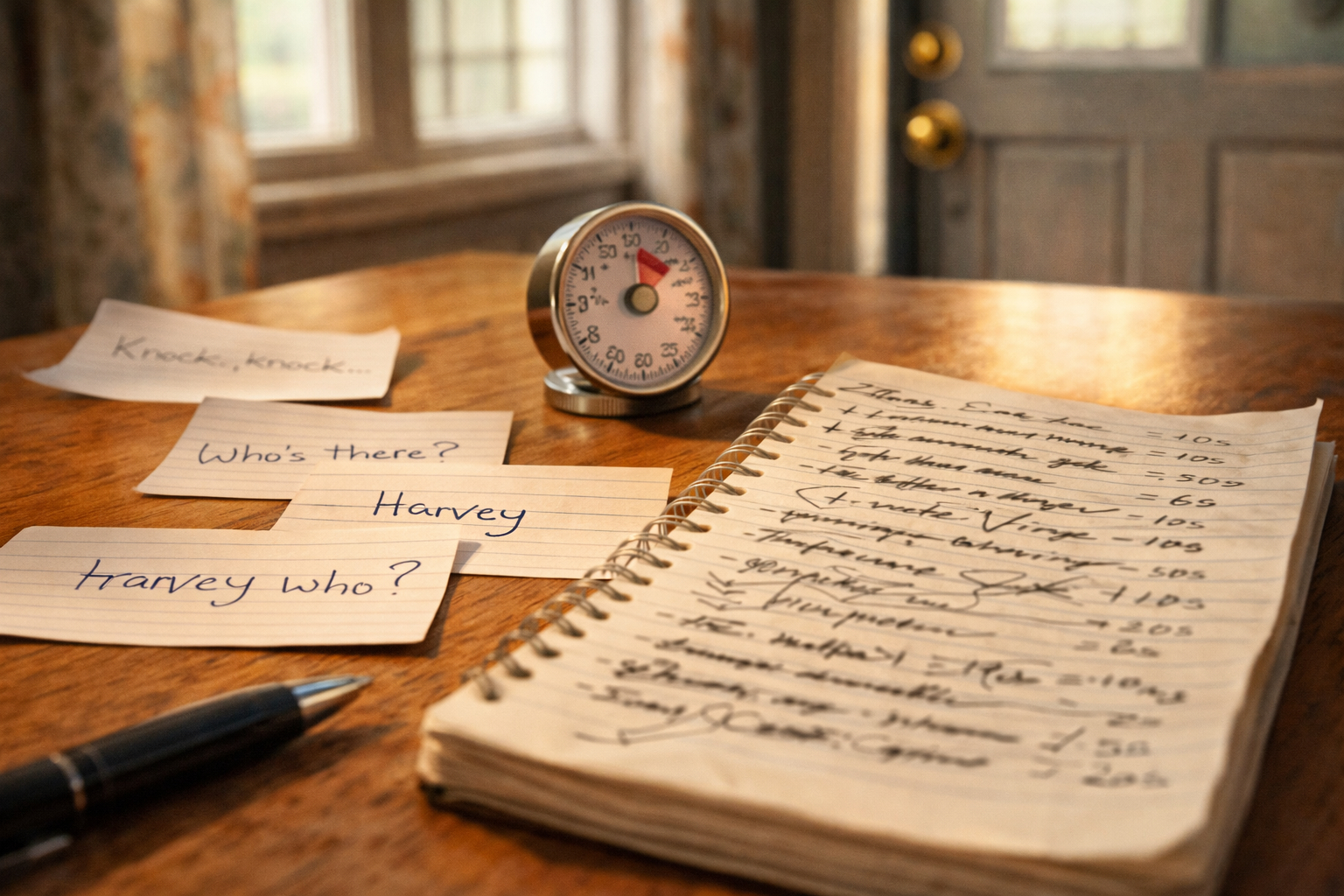
Knock knock jokes are a compact form of humor that rely on predictable structure and an element of surprise.
They thrive on rhythm and clear cues between teller and listener to land the punchline effectively.
Even small changes to wording or the length of a pause significantly influence the laugh you get.
Simple rehearsals make a disproportionate difference to live delivery.
The role of structure
Structure provides the skeleton for any knock knock joke. The canonical exchange—knock, response, who, reply—creates a comfortable loop audiences expect. Within that loop there is room to subvert expectations by switching names, homophones, or semantic gaps. Keeping announcements concise prevents the setup from dragging and keeps attention on the punchline. An explicit setup helps the listener participate, making the payoff clearer.
Timing and delivery
Delivery is as important as the written joke. Pauses can act as signposts; a fractionally longer pause before the punchline increases anticipation without revealing the strategy. Tone, facial expression, and pacing should all support the surprise rather than telegraph it. Practice aloud to find natural beats and avoid rushing through the exchange. Micro-expressions and slight vocal changes can signal a switch from expectation to punchline.
Tailoring to your audience
Successful knock knock jokes respect the listener’s background and expectations. What works with children often relies on simple wordplay and silly sounds, while adult audiences may appreciate clever misdirection or layered puns. Read the room and choose a level of subtlety that fits the social setting. Avoid obscure references that require extra explanation, which will break the rhythm.
– Use familiar references sparingly so the joke remains accessible.
– Adjust vocabulary and pacing when speaking with different age groups.
– Have a mix of quick gags and slightly longer surprises to suit different attention spans.
Test jokes in low-stakes moments to see what lands. Collect feedback and refine wording, because small edits change timing and comprehension.
Practice and refinement
Testing jokes in front of friends or recording yourself reveals pacing issues and ambiguous phrases. As you try variations, note which words speed delivery or cause confusion. Keep a running list of your best one-liners and retire ones that consistently fall flat. Iteration is the quickest path to a polished short routine.
– Record short performances to hear timing and eliminate filler words.
– Ask for one specific reaction, like a smile or laugh, to avoid vague feedback.
Regular practice makes timing feel natural rather than calculated. Over time you’ll develop a personal style that preserves surprise while sounding effortless.
Conclusion
Structure and timing are the core tools for crafting effective knock knock jokes.
Focus on minimal, clear setups and practiced delivery to enhance the surprise.
With attention to audience and a few rehearsed beats, even the simplest joke will get a smile.