
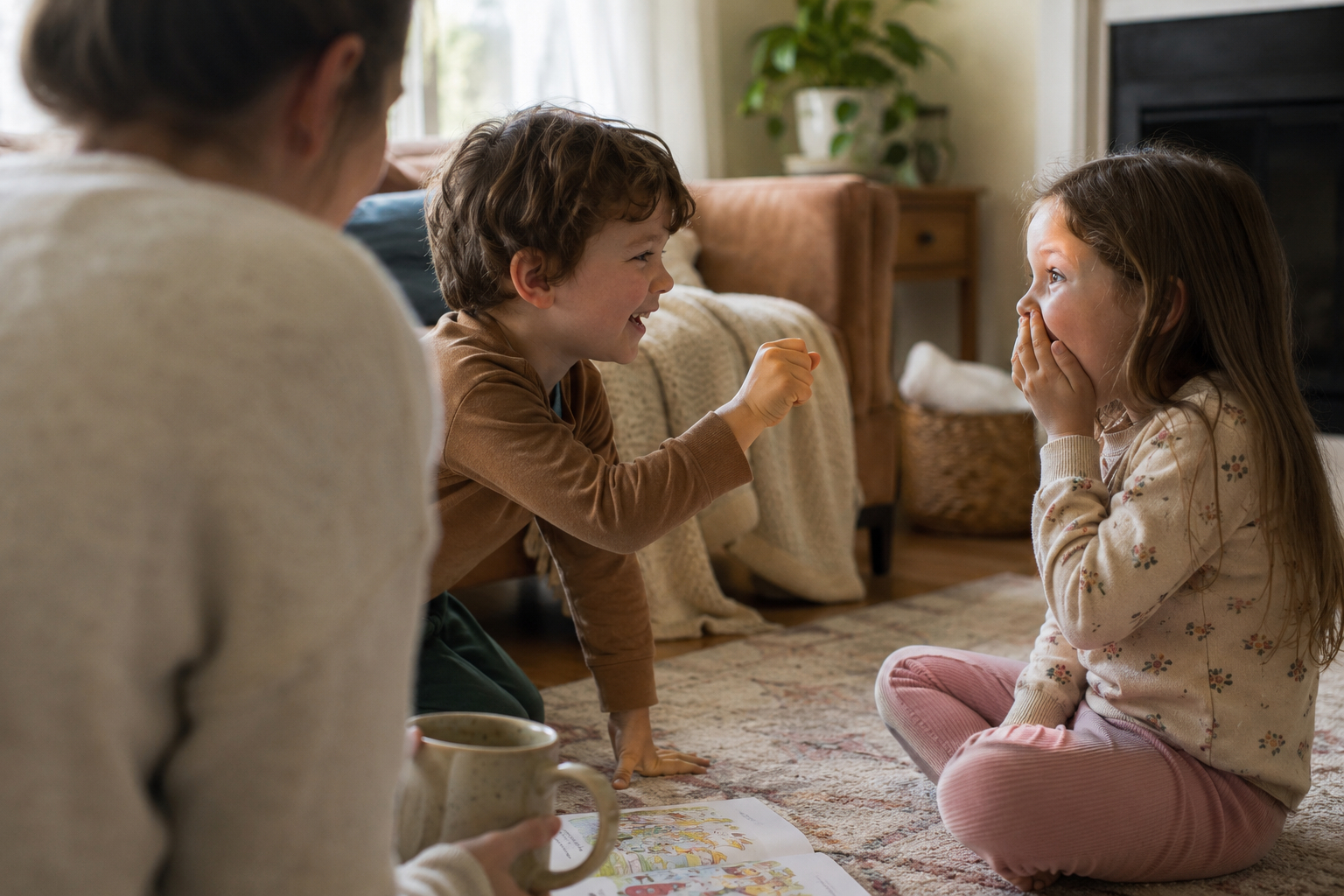
Knock-knock jokes are more than silly lines; they act as tiny social rehearsals for children.
Short call-and-response routines encourage listening, turn-taking, and reading cues from partners.
When caregivers join in, these playful moments model gentle attention and responsive behavior.
Over time, repeated light interactions help children recognize emotions and practice considerate replies.
Why Knock-Knock Play Helps Kids
Knock-knock exchanges are structured, predictable, and forgiving, which lowers anxiety for young learners. They provide a safe framework for practicing conversational rules such as waiting, answering, and smiling. The repetitive format gives children multiple chances to notice how words and tone influence a partner’s reaction. Through short, fun interactions they develop the habit of paying attention and responding kindly.
- Call: “Knock knock.”
- Reply: “Who’s there?”
- Punchline and reaction: use simple, playful lines to prompt emotional feedback.
Used deliberately, these routines become micro-lessons in empathy. Caregivers can vary responses to highlight different feelings or to teach patience.
Practical Ways to Use Knock-Knock Exchanges
Integrate knock-knock play into daily transitions like mealtimes, car rides, or dressing routines. Start simple and gradually introduce variations that ask children to predict or interpret a reaction. Encourage them to notice facial expressions and to try different tones to see how responses change. Keep sessions brief and positive so the activity stays enjoyable and not performative.
- Prompt children to suggest the punchline and discuss how it made others react.
- Swap roles so the child initiates and practices asking and listening.
Short, repeated practices are more effective than long lessons. The goal is to build a pattern of small, attentive interactions that translate to everyday empathy.
Adapting Jokes for Different Ages
For toddlers, keep language concrete and reactions exaggerated to make emotional cues obvious. Preschoolers can try silly variations that require predicting a partner’s laugh or groan. Older children benefit from collaborative creation, inventing punchlines that reflect shared experiences or classroom topics. Adjust complexity based on attention span and social comfort.
- Toddlers: simple sounds and smiles.
- Preschoolers: short narratives and exaggerated reactions.
- School-age: collaborative or themed knock-knock challenges.
Adapting the activity keeps it engaging and developmentally appropriate. It also reinforces that empathy grows through practice and playful feedback.
Conclusion
Knock-knock play offers a lightweight, repeatable way to practice listening and responding.
Small routines teach children to notice feelings and to act with consideration.
With consistent, playful use, these micro-interactions build real social empathy over time.