
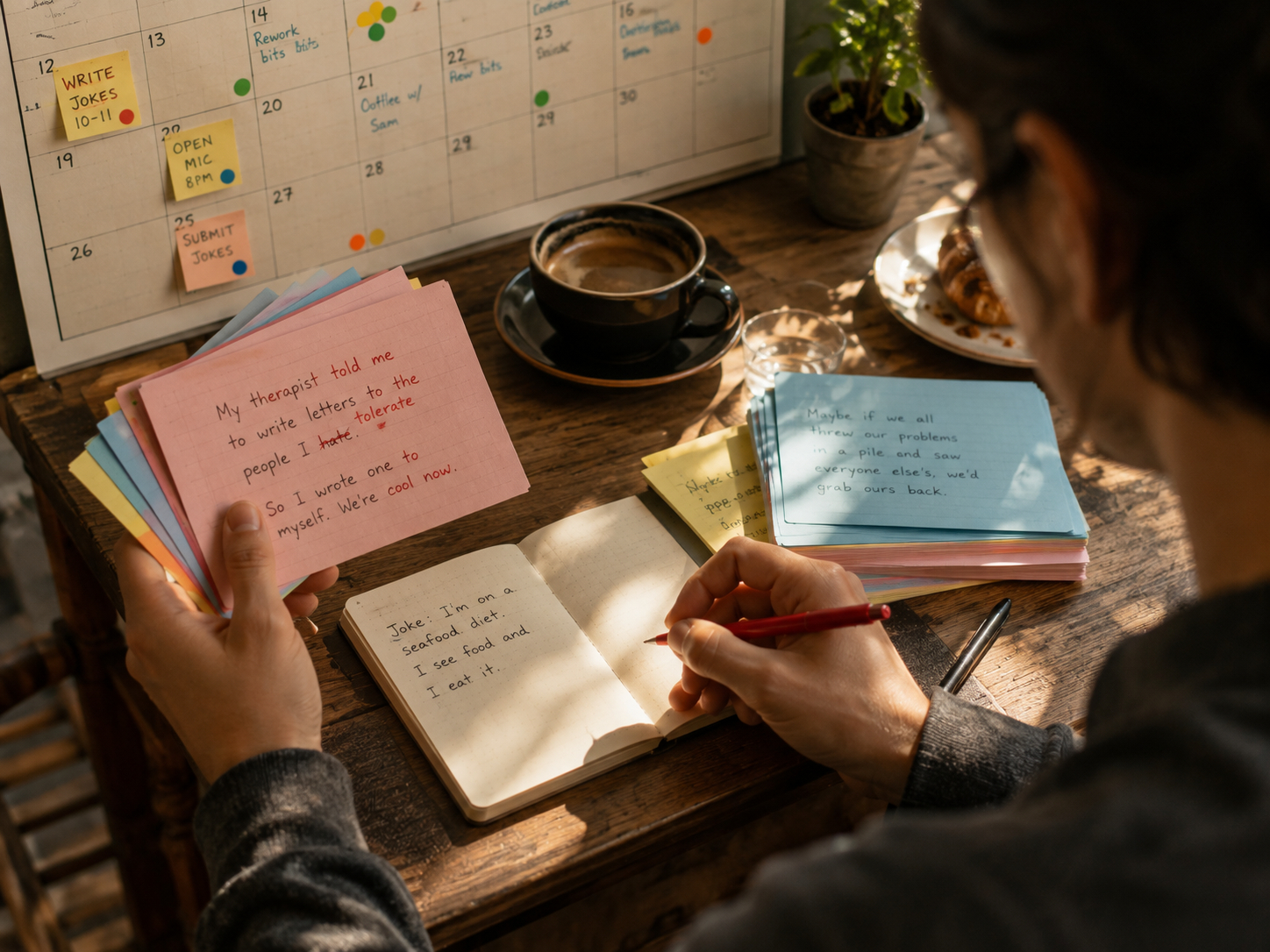
Consistent short jokes start with a reliable, repeatable process rather than flashes of inspiration. By shaping a habit system you can generate, capture, and refine micro-jokes on a schedule that fits everyday life. The goal is to make brevity and clarity routine so punchlines arrive naturally and quickly. This article outlines practical steps to build that system and keep a steady flow of shareable short jokes.
Start with Lean Prompts
Create a compact prompt list that nudges observation without demanding long effort. Use sensory cues, daily routines, or small contradictions as starting points, and limit each prompt to a single line so it forces concise angles. Short prompts reduce decision fatigue and encourage quantity, which increases the chance of a usable punchline emerging. When you answer a prompt, aim for one or two candidate lines rather than drafting a paragraph.
- Morning commute oddities
- Household object mismatches
- One-word contradictions (e.g., “silent alarm”)
These prompts are tools to stimulate short ideas quickly and repeatedly. Rotate them weekly to keep freshness without reinventing the process.
Capture Ideas Immediately
An idea is most valuable the moment it appears, so capture it before analysis erodes its spark. Use a simple notes app, voice memo, or paper pocket notebook depending on your workflow; the method matters less than speed. Tag entries by prompt or mood so you can filter later, and avoid editing in the capture step to preserve raw rhythm and surprise. Quick capture builds a backlog you can mine when you have time to polish.
Consistent capture makes ideation predictable and less stressful. Over time your backlog becomes a resource for testing and recycling lines.
Polish with Tight Editing
Editing is where short jokes either land or fall flat, so trim aggressively and focus on rhythm. Remove filler words, sharpen nouns and verbs, and test alternate word orders aloud to find the cleanest delivery. Watch for unnecessary setup: a great short joke often contains its own context within the line. Small swaps—one stronger verb or a contrasting adjective—can transform a weak line into a memorable punchline.
- Cut prepositions that don’t add meaning
- Replace vague words with concrete images
Keep edits surgical and incremental, preserving the original spark while improving clarity. Iterate quickly and keep versions labeled so you can compare results.
Test, Schedule, and Rotate
Trial and error tells you what lands, so test lines in low-risk places and note audience response. Schedule posts or practice aloud at regular intervals to build confidence and timing. Rotate material to avoid overuse and periodically revisit older lines—some may improve with a fresh edit or new context. Tracking performance helps refine which prompts and edits consistently produce hits.
A routine that includes testing and rotation sustains variety and keeps your voice fresh. Over time the system yields a dependable stream of short jokes ready for sharing.
Conclusion
Creating short jokes consistently is a habit you can design and refine. Capture quickly, edit tightly, and test regularly to build a reliable pipeline of bite-sized humor. With a repeatable system, clever one-liners become an everyday output rather than a rare stroke of luck.