
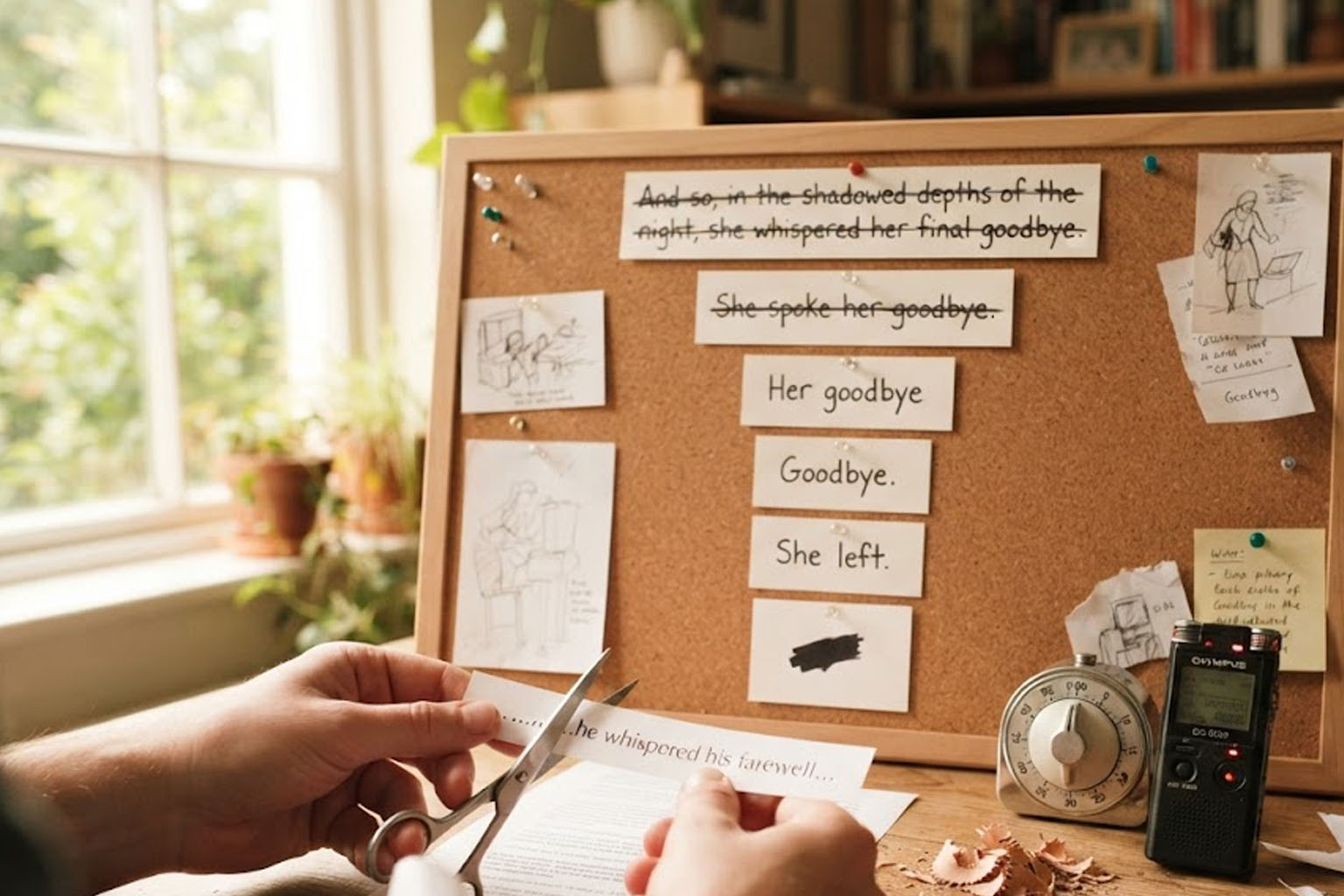
Great one-liners do three jobs: they land quickly, surprise slightly, and leave a memory. They aren’t just short jokes but a tightening of thought until only the essential remains. A single strong line can shift a mood, break the ice, or puncture pretension. Learning to craft them is about precision more than punch.
Why brevity wins
Brevity forces selection: unnecessary words drop away and what’s left feels inevitable. Listeners are more likely to remember and repeat a line that fits a single breath. In performance or conversation, a compact line gives room for reaction. A crisp line reduces the listener’s cognitive load and increases recall.
That reaction is where humor lives, so give people a beat. Short lines create that space naturally. Use contrast to amplify the ending and make the payoff clear.
Tools that sharpen lines
Look for contrast, misdirection, and compressed imagery when drafting one-liners. Swap abstract nouns for vivid nouns and verbs; details do heavy lifting. Rhythm matters — a well-timed pause or an anastrophic twist can double a laugh. Test different word orders until the line snaps into place.
Economy of language doesn’t mean blandness; it invites specificity. Keep tweaking until every word earns its keep. Occasionally bend grammar for rhythm if it increases impact.
Testing and delivery
Don’t assume a line will work in every setting; try it in different company to see what lands. Delivery—tone, timing, and where you place the pause—often decides success more than wording. Record yourself or say lines aloud to feel the cadence. Be ready to drop or adapt lines that fall flat.
One-liners are as much performance as writing, so rehearse casually. Listening for real-world responses is the fastest way to improve. Make small adjustments to timing and emphasis based on feedback.
Common pitfalls
Avoid clichés, weak setups, and relying on shock as a crutch. If a line depends on overused phrasing, it will land flat; listeners anticipate the familiar. Also watch for ambiguity that confuses rather than amuses—clarity sharpens the twist. Balance cleverness with empathy so the joke punches up instead of down.
Trim anything that doesn’t contribute to the twist or image. If you can’t explain the line quickly, it’s probably not tight enough. When in doubt, cut another word.
Conclusion
Sharp one-liners come from observing, cutting, and testing until only the necessary image or twist remains. Aim for clarity, vividness, and a good pause. With practice you’ll find fewer words deliver bigger returns.