
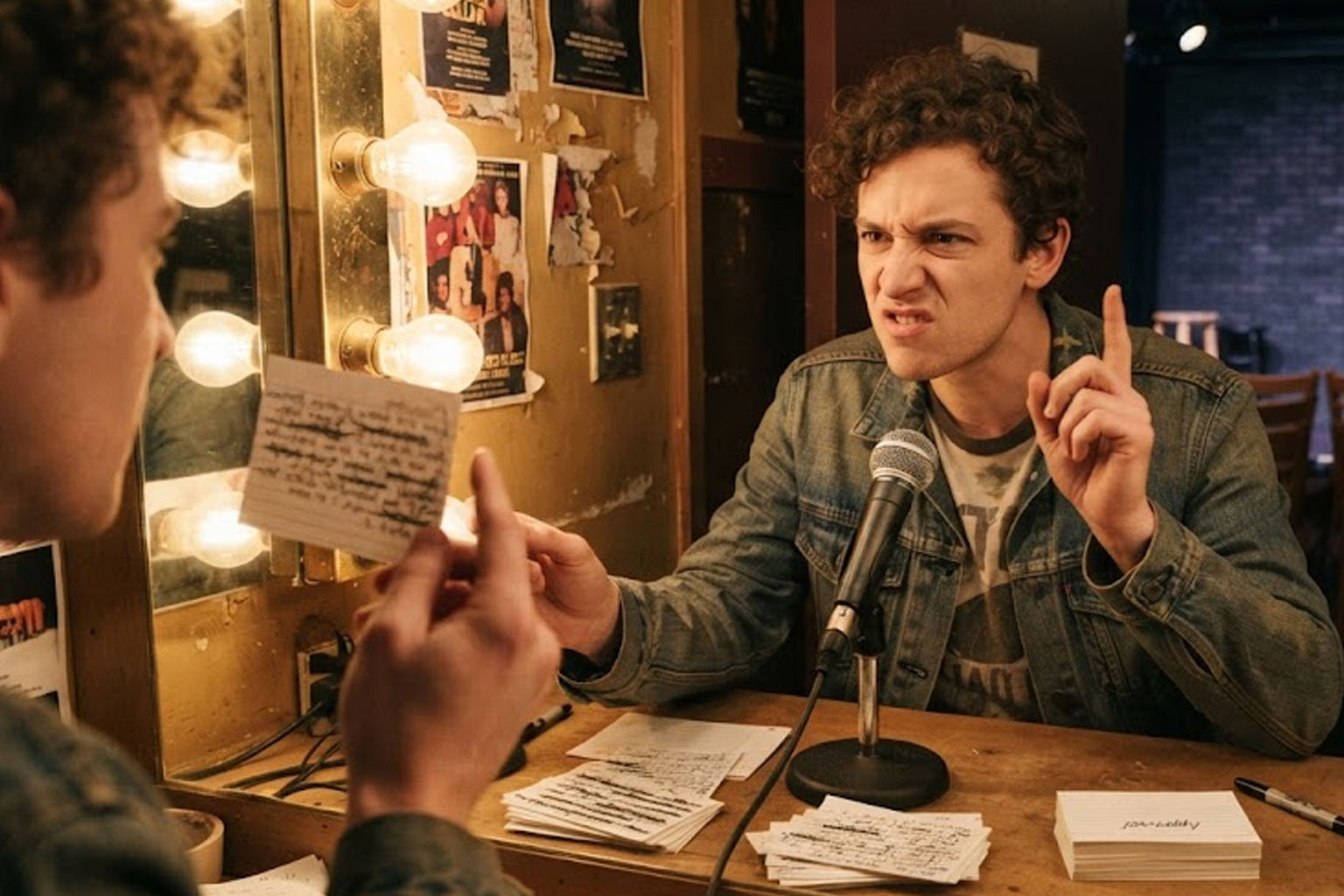
One-liners are a tiny art form that lives and dies in a single sentence.
They need surprise, a clean setup, and a punch that arrives fast.
You can write a dozen and keep only one that lands.
This short guide offers practical habits to sharpen those lines and get laughs more often.
Keep it short and unexpected
One-liners work best when they strip the situation down to the smallest possible setup and then pivot. Keep the setup specific but economical, so the punch has room to surprise. Avoid over-explaining—the joke should do the work. A tight line often beats a clever but cluttered one.
If a sentence needs more than one breath, it needs trimming. Cut until removing words changes the meaning.
Play with rhythm and misdirection
Rhythm matters: a short setup followed by a faster or staccato punch can create a satisfying beat. Play with sentence length, punctuation, and pauses to control the listener’s expectations. Misdirection is the classic tool—lead the listener one way and snap another. Timing during delivery will sell a line that looks merely clever on the page.
Read the line aloud, trying different cadences and pauses. Adjust wording until the spoken rhythm feels natural.
Trim, test, and place your line
After you have a candidate, ruthlessly trim filler words and redundant adjectives. Replace vague words with specific images where possible; specificity often amplifies surprise. Test lines in different contexts—text, social media, conversation—because placement changes how a line reads. Keep track of what works and rework what doesn’t.
- Is the setup under 10–12 words?
- Does the punch introduce an unexpected angle?
- Can you deliver it in one breath?
A short habit of testing and trimming will accumulate better lines than occasional inspiration. Save the best ones and rotate them into conversation until they feel effortless.
Mind your audience and context
One-liners don’t exist in a vacuum; the same line that slays at a late-night show can flop in a family group chat. Match tone to context—edgier twists suit adult crowds while cleaner misdirection plays better with mixed audiences. Think about the medium too: in text you rely on phrasing and punctuation, while live delivery adds voice and timing that can salvage or sink a line. Allow room to adapt: swap an image, tweak a reference, or change cadence depending on the reaction you get.
Respect boundaries and avoid punching down; cleverness that hurts people rarely lands. A thoughtful approach keeps the humor sharp and the room open.
Conclusion
Small edits turn good jokes into great ones.
Use rhythm, surprise, and ruthless trimming.
Practice aloud and keep the handful that work.