
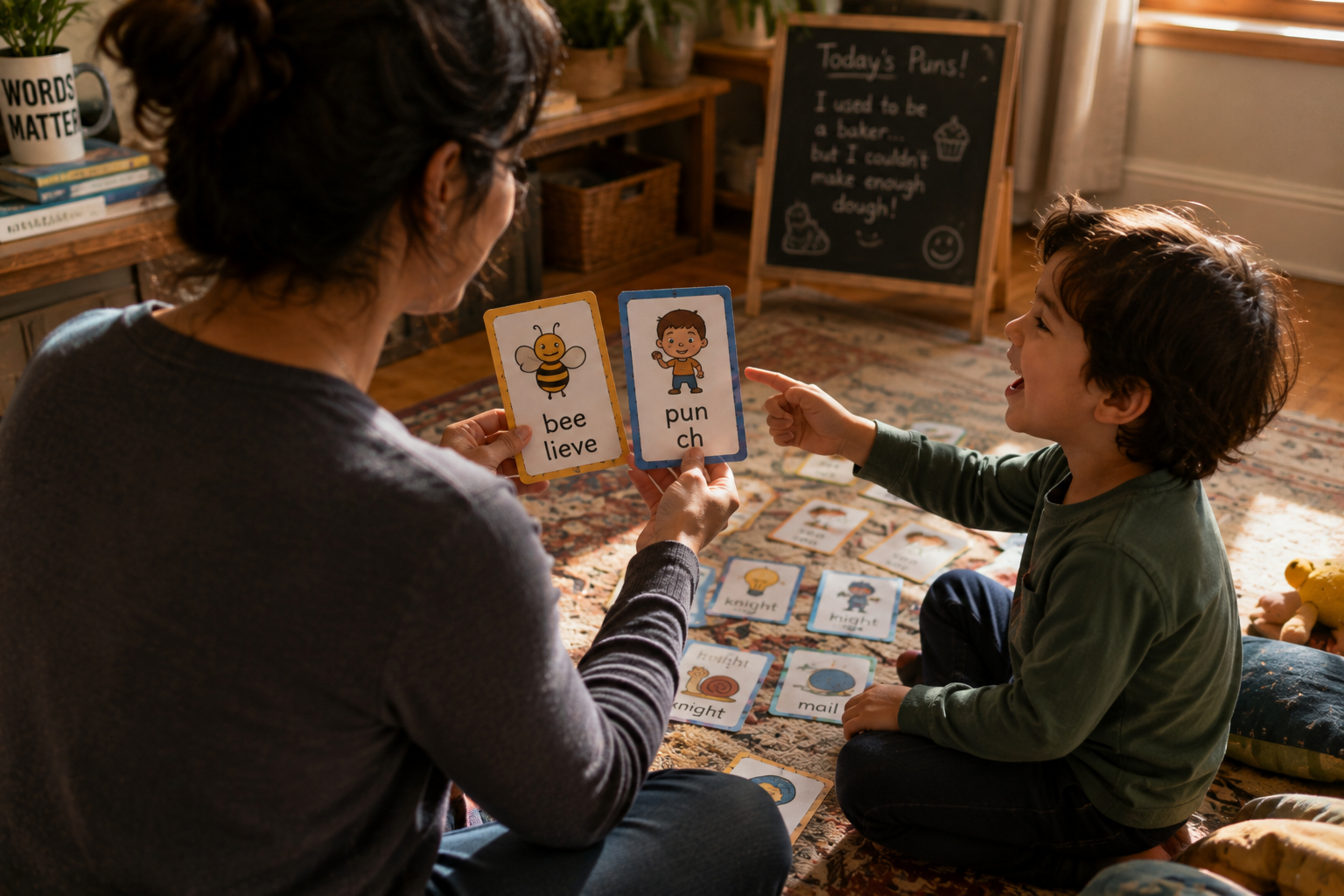
Puns are playful language tools that help children notice sounds and meanings.
Using puns in everyday conversation builds phonological awareness and flexible thinking.
Short, well-chosen puns can turn language practice into a fun shared moment.
This article explains how puns support learning and offers simple activities to try.
Parents and educators can model puns during reading, play, and routine moments.
Keep examples age-appropriate and lighthearted to encourage curiosity. Regular, brief practice often beats long lessons. Celebrate creative attempts, even when the joke is imperfect.
Why puns support language development
Puns encourage kids to compare words, spot patterns, and appreciate multiple meanings.
That kind of mental juggling strengthens vocabulary, semantic awareness, and metaphor comprehension.
Because puns hinge on sound and sense, they also support phonemic awareness and pronunciation.
The playful element reduces pressure and makes experimentation with language feel safe.
Research in language development highlights the role of playful language in early literacy.
Over time, this playful practice can improve reading readiness and creative expression. It’s also a social bridge that invites shared laughter and conversation. Try integrating puns into songs and story times.
Simple activities to teach puns
Start with everyday objects and simple homophones that match a child’s vocabulary.
Introduce a pun, explain why it’s funny, then invite the child to invent a pair of words.
Turn it into a quick game: one person says a word, the other finds a pun or rhyming twist.
Keep turns short and celebrate attempts more than perfect punchlines.
Adapt challenges as children succeed, moving from simple homophones to multiword plays.
- Play “Pun of the Day” with a picture and two possible captions.
- Make a silly story where a character mishears a word and causes gentle chaos.
- Use chalk or cards to match homophones and create silly sentences together.
These activities require minimal preparation and can fit into daily routines. They let children explore meaning with low stakes and lots of smiles. Rotate themes so new vocabulary appears naturally.
Tips for timing and tone
Observe how a child responds and adjust complexity—some kids prefer literal humor at first.
Avoid forcing puns as a lesson; instead, weave them naturally into play and reading.
Praise creativity and model gentle laughter rather than corrective feedback.
Keep responses positive and laugh with children to model sociable humor.
Respecting a child’s comfort keeps wordplay enjoyable and effective. Over time, curiosity about language will grow on its own. If a child resists, try a gentler approach later.
Conclusion
Puns are accessible tools that nurture language skills through play.
Small, frequent activities build awareness of sound and meaning.
With patience and humor, wordplay becomes a lasting language habit.