
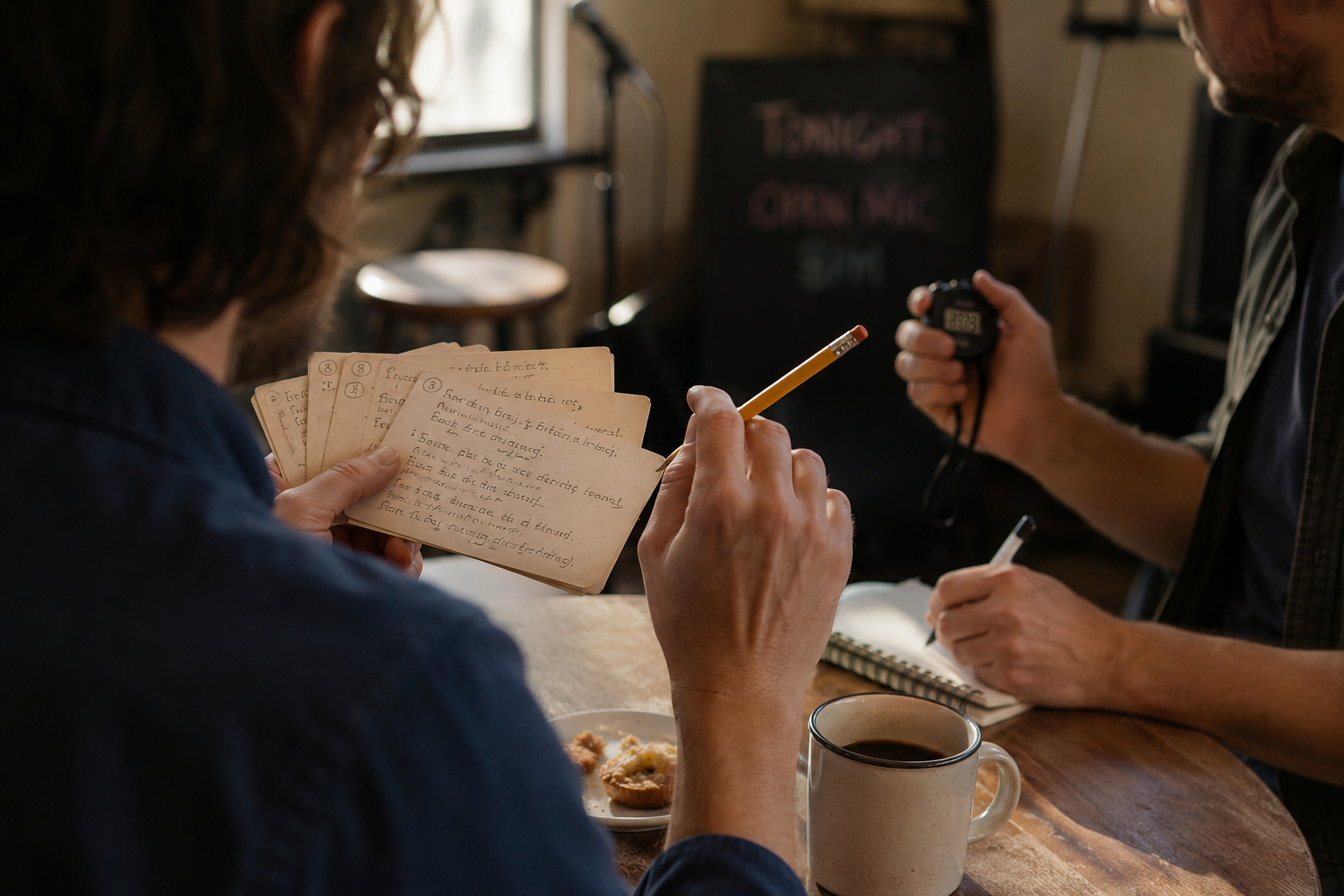
One-liners live or die by how economically they state an idea and how naturally they land. When you focus on editing and rhythm you give each word a job and tighten the pathways to the punchline. This article lays out practical steps to clarify premises, shape cadence, and remove friction so jokes read cleanly and sound effortless. The goal is reliable, repeatable techniques that fit a daily creative routine.
Clarify the premise first
Begin by identifying the simplest, most relatable element of the observation or idea you want to twist. A one-liner succeeds when the audience instantly understands the setup without extra explanation, so avoid layered complications in the premise. State the world of the joke plainly, then steer the listener toward the unexpected turn. Clear premises reduce the number of words you need and make the punchline sharper.
Work until the setup feels inevitable and minimal; every extra phrase increases resistance. Cut anything that doesn’t move the listener directly toward the contrast or surprise you intend. This makes revision straightforward and keeps the joke voice tight.
Shape a natural cadence
Rhythm matters as much as wording — the way syllables fall can amplify or blunt a punchline. Read drafts aloud and listen for stumbles, uneven pacing, or places that demand extra emphasis. Shorter beats often create momentum, while a measured pause before the twist can heighten surprise. Experiment with contractions, line breaks, and pacing to find the most natural delivery for your voice.
Record yourself and note where breaths naturally come; those are places to respect or exploit. Good cadence makes editing choices obvious and helps the joke land consistently across readers and readers who perform it live.
Strip unnecessary words ruthlessly
Every word in a one-liner should carry weight — either clarifying the premise, misdirecting, or delivering the punch. Run through your draft deleting adjectives, qualifiers, and filler that don’t change the meaning. Often a cleaner noun or a tighter verb will render a clause obsolete. Editing for economy sharpens the contrast that creates humor and reduces cognitive friction for the audience.
Use parallelism and symmetry to make reductions feel intentional rather than abrupt. The resulting spare language also increases adaptability when you test different punchline angles.
Use contrast and reversal thoughtfully
Most one-liners rely on a pivot: a contrast between expectation and reality, or a reversal of perspective. Make sure the setup builds a clear expectation you can subvert economically. The more precise the setup, the more potent a small reversal becomes. Aim for a punchline that reframes the premise in a single, resonant image or idea.
Balance subtlety and clarity so the audience sees the switch immediately but still feels the cleverness. Reversals that rely on shared knowledge land fastest.
Polish through testing and iteration
Testing is where rhythm and economy meet reality: try your line on different audiences or platforms to see how it travels. Note which words consistently provoke laughter and which require extra explanation, then revise accordingly. Keep a short list of variants to compare and favor the shortest version that still preserves the twist. Iteration turns occasional hits into dependable lines.
Document what works and why, so future edits are faster and more precise. Over time this feedback loop sharpens both your ear and your editing instincts.
Conclusion
Strong one-liners come from precise premises, practiced cadence, and relentless editing. Treat each word as paid staff: if it isn’t earning its place, remove it. With routine review and audience testing your one-liner economy will steadily improve.