
One-liners work when they capture a clear observation and deliver a compact twist. Small details often supply that observation: a word choice, a contrast, or a timing cue. Learning to spot and shape those details makes writing one-liners faster and more consistent. This piece breaks down practical steps you can use to find hooks, tighten setups, and sharpen punchlines. With a few targeted habits, you can produce short jokes that feel effortless and land more often.
Find the everyday hook
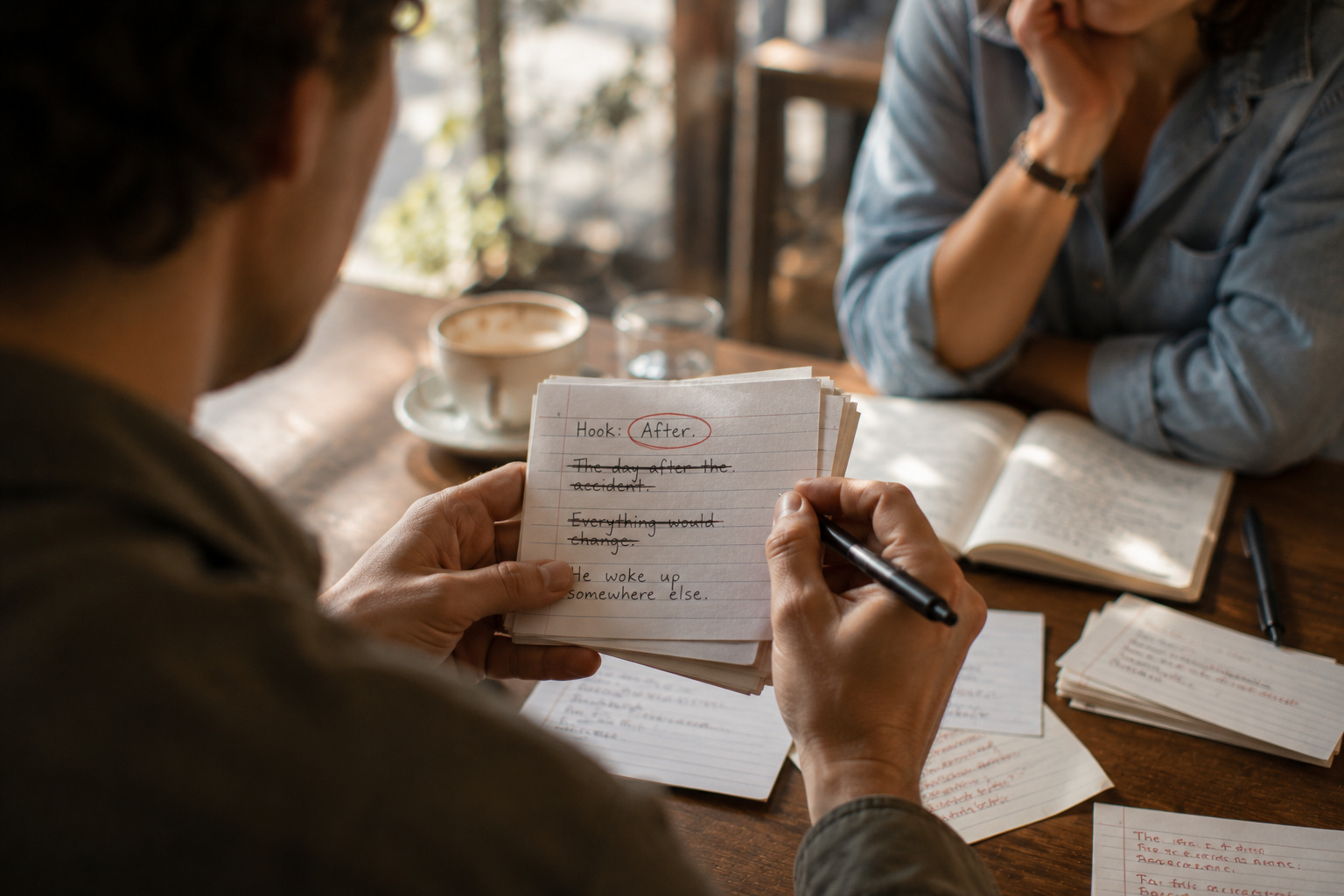
Start with a single, specific image or moment you noticed during the day and hold on to whatever felt odd or notable about it. Narrow that observation to one surprising or relatable element that can be isolated as the hook without extra context. Hooks work best when they are concrete rather than abstract, so choose objects, behaviors, or quick exchanges that the audience can picture. A strong hook already carries emotional or cognitive weight, which makes the punchline feel earned and inevitable.
Keep a running list of hooks and revisit them when you need a prompt. Often the best one-liners come from combining two unrelated hooks into a single, sharper idea.
Trim the setup
Economy is everything: remove any word that doesn’t move the listener toward the punch and trust the audience to fill small gaps. Aim for a setup that orients quickly and creates a clear expectation without extra detail. Short setups can still be vivid if they include one precise detail, a tense verb, or a well-chosen noun that anchors the scene. Testing variations will show which words are unnecessary and which create necessary clarity for the twist.
- Replace long phrases with single evocative nouns.
- Cut qualifiers like very, really, or just that weaken impact.
- Swap passive constructions for active verbs to speed the line.
Use the bullets as a checklist when you edit a line and apply the smallest change that tightens rhythm. Small trims often reveal a stronger punchline buried beneath the clutter.
Punch with a precise twist
The punchline should pivot from the setup’s expectation in a single, clear direction that the audience can grasp instantly. Surprise can come from reversal, literalization, reframing, or connecting two incongruous ideas through a shared word or image. Keep the punch short and allow a beat for the audience to connect the two parts; sometimes silence after the line is the best delivery tool. Rhythm and sound often help a twist land, so listen for consonance, internal rhyme, or abrupt stops that enhance the surprise.
If the twist feels forced, try shifting the hook rather than reshaping the punch, since a better hook can make a simple punch sing. A tighter connection between setup and twist usually produces a larger reaction.
Polish and test
Read lines aloud, ideally to a small, honest audience or a friend who will tell you when something consistently falls flat. Timing, pauses, and emphasis are part of the writing itself, so note where a pause enhances the surprise or where an extra word kills it. Keep versions of promising lines and return to them after a day or two to see which still feel fresh. Don’t hesitate to discard lines that sounded great in your head but fail in delivery; iteration is how the best one-liners emerge.
Track which one-liners consistently land and study the elements they share so you can reproduce that effect. Over time you’ll recognize patterns that reliably produce compact, memorable humor.
Conclusion
One-liners thrive on attention to small, concrete details and ruthless editing. Find a hook, trim the setup, craft a precise twist, and test with real listeners to refine delivery. Practicing these steps regularly will make short, memorable jokes part of your creative toolkit.