
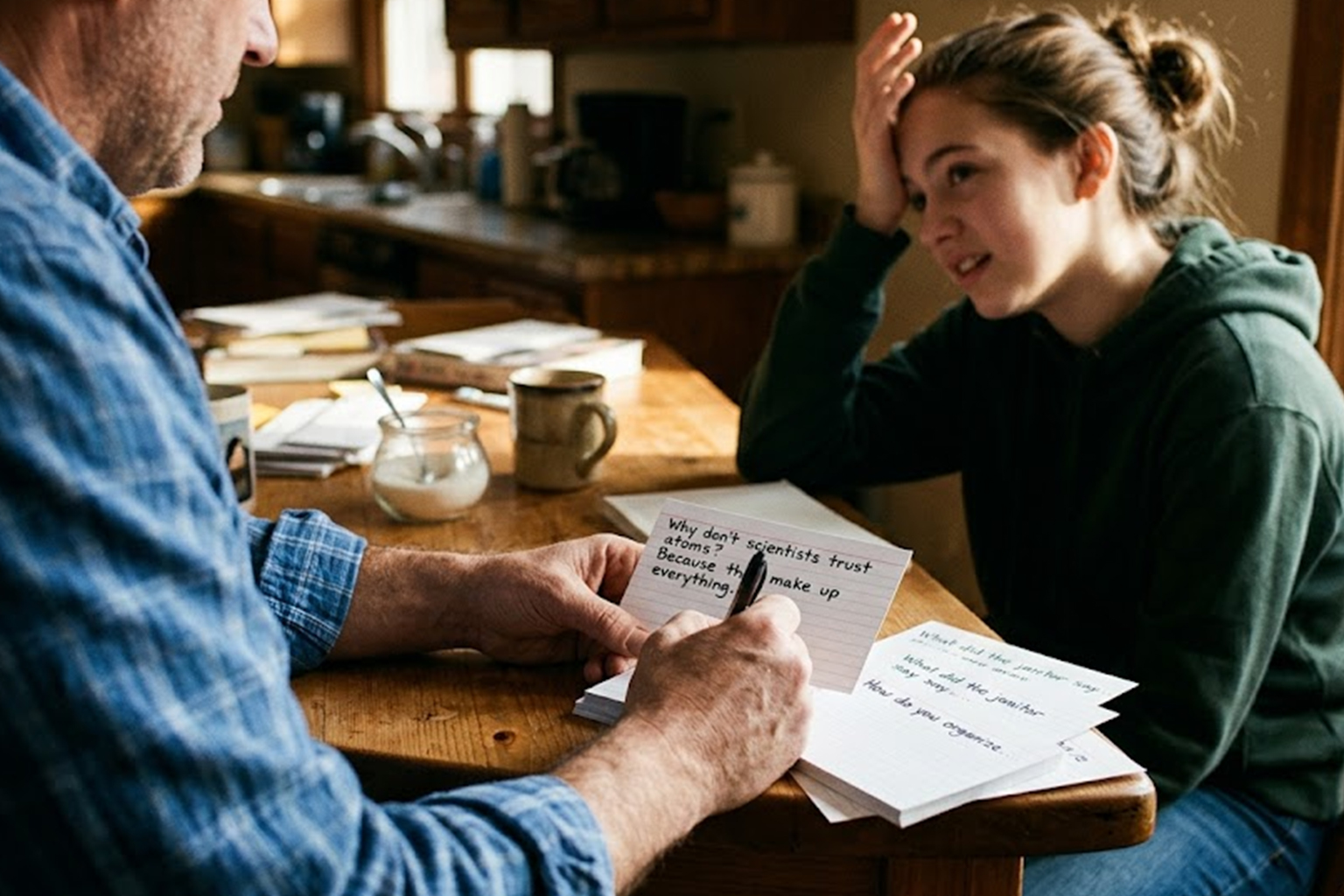
Everyone loves a quick, clever joke that disarms a room and sparks a smile. Dad jokes do that with simple setups, predictable puns, and an affectionate wink. Learning how to craft them helps you be playful without forcing humor. This guide walks through why they work and how to write and deliver them smoothly. With a few simple techniques you can create quick jokes that feel effortless.
Why Dad Jokes Work
Dad jokes rely on timing, familiarity, and a gentle surprise that resolves in a pun or twist. Their predictability invites listeners to participate, anticipating the punchline and enjoying the shared groan. Because the humor is low-stakes, they ease social tension rather than challenge it. That makes them versatile in family gatherings, casual conversations, and light workplace banter. The best ones are brief enough to remember and versatile enough to repeat.
Think of them as social glue—short, repeatable, and safe. They score points when they fit the moment.
Writing a Memorable One-Liner
Start with a familiar premise and find a concise angle that allows a twist. Keep language simple and rhythm tight; fewer syllables often heighten the punch. Aim for clarity so listeners register the setup before the payoff arrives. Test a few variations aloud to see which phrasing lands best. A twist that subverts expectation by a single word is often enough.
- Use common words and images.
- Lean into puns or literal interpretations.
- Trim anything unnecessary.
A good one-liner reads clean and sounds effortless. Edit until the cadence feels natural.
Delivery and Timing Tips
Delivery often makes or breaks a dad joke; the same line can charm or fall flat depending on timing. Pause slightly before the punchline to build expectation, then offer the line with light sincerity. Match your facial expression to the tone—deadpan or warm both work depending on audience. Embrace the groan; it indicates the joke hit its mark. Subtle variations in pace can change the reaction dramatically.
If a joke misses, move on with good humor. Resilience keeps the exchange pleasant and encourages more laughs.
Reading the Room
Good timing starts with noticing mood and context before you speak. Consider who is present and whether playful humor will be welcome right now. Avoid sensitive topics and tailor references to shared experiences to increase the chance of a warm response. When in doubt, aim for self-deprecating angles that keep the focus light. Practicing this awareness helps you choose the right joke for any moment.
Observe responses and adapt your approach over time. That flexibility will keep your jokes friendly and effective.
Conclusion
Good dad jokes are small exercises in economy: clear setup, neat twist, and confident delivery. Practicing writing and testing lines helps you build a reliable repertoire. Use them to connect, lighten the mood, and share a quick smile.