
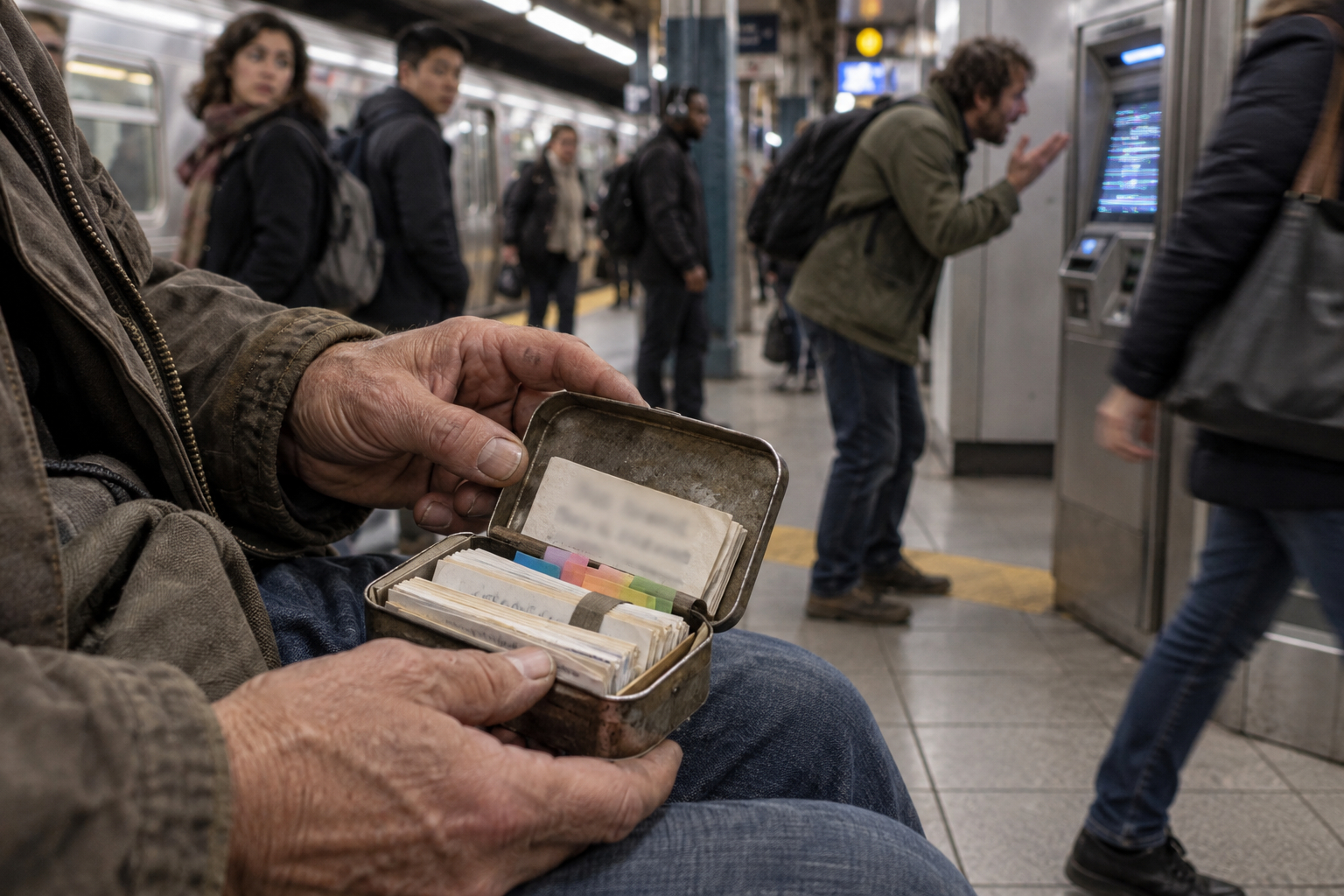
Little scenes are where most sharable jokes begin: a passenger muttering at a broken vending machine, a barista’s deadpan response to an odd order, the awkward geometry of two people trying to pass in a narrow hallway. You don’t need a stage or a notebook to notice them, just a habit of paying attention and a quick decision to register what struck you. Over time those small observations build into a pocket library of setups, quirks, and characters you can return to whenever you need fresh material. This piece explains where to find those moments, how to capture them fast, and what to do with them once you have them.
Spotting Mini-Scenes
Train your eye for contrast: look for things that don’t match—tone and context, expectation and outcome, size and importance. A loud voice in a tranquil space, someone apologizing profusely to an automated system, or a sign that contradicts its surroundings are all seeds for a short, relatable scene. The useful ones have a clear small conflict or an odd detail that can be exaggerated without losing the core truth. Keep your focus on specifics—the exact phrasing, the timing, a telling gesture—because specificity is what makes an observation funny and memorable.
When you start, aim to spot three such scenes a day. It makes noticing a habit rather than a hunt, and it trains you to see comedy in routine places.
Quick Capture Tools
Carry one simple capture method you actually use: a notes app, voice memos, or a tiny paper notebook. Short audio clips are great for preserving cadence and tone; a single sentence saved after a scene can be gold when you return later. Tag entries with a word or two—”awkward”, “misread”, “tiny power struggle”—so you can find themes when you revisit your archive. The goal is speed: if it takes too long to record, you’ll lose momentum and the scene’s emotional edge.
- Use a consistent label system so retrieval is quick.
- Time-stamp or add a one-line context note when helpful.
- Keep entries under a few sentences to force clarity.
With a compact system, your capture becomes frictionless, and you’ll be surprised how many usable moments pile up.
Shaping Notes into Jokes
Turn a captured scene into a comic bit by trimming to the essence: what made it odd, who was affected, and what unexpected detail flips it into humor. Test one punchline that heightens the mismatch without inventing facts; editing should sharpen, not rewrite, the observation. Try the line aloud once or twice to check rhythm and timing—what reads well on the page might need tightening to land as speech. Keep multiple drafts short so you can perform or post quickly and iterate based on response.
Don’t over-polish early; many tiny scenes work best when they retain a raw, recognizable truth that people say, “I’ve seen that.”
Conclusion
Collecting tiny scenes is less about cleverness and more about attention and a low-friction capture habit. Focus on specific, repeatable details and a single quick tool to record them. Over time those small notes become a reliable source of short, sharable laughs.