
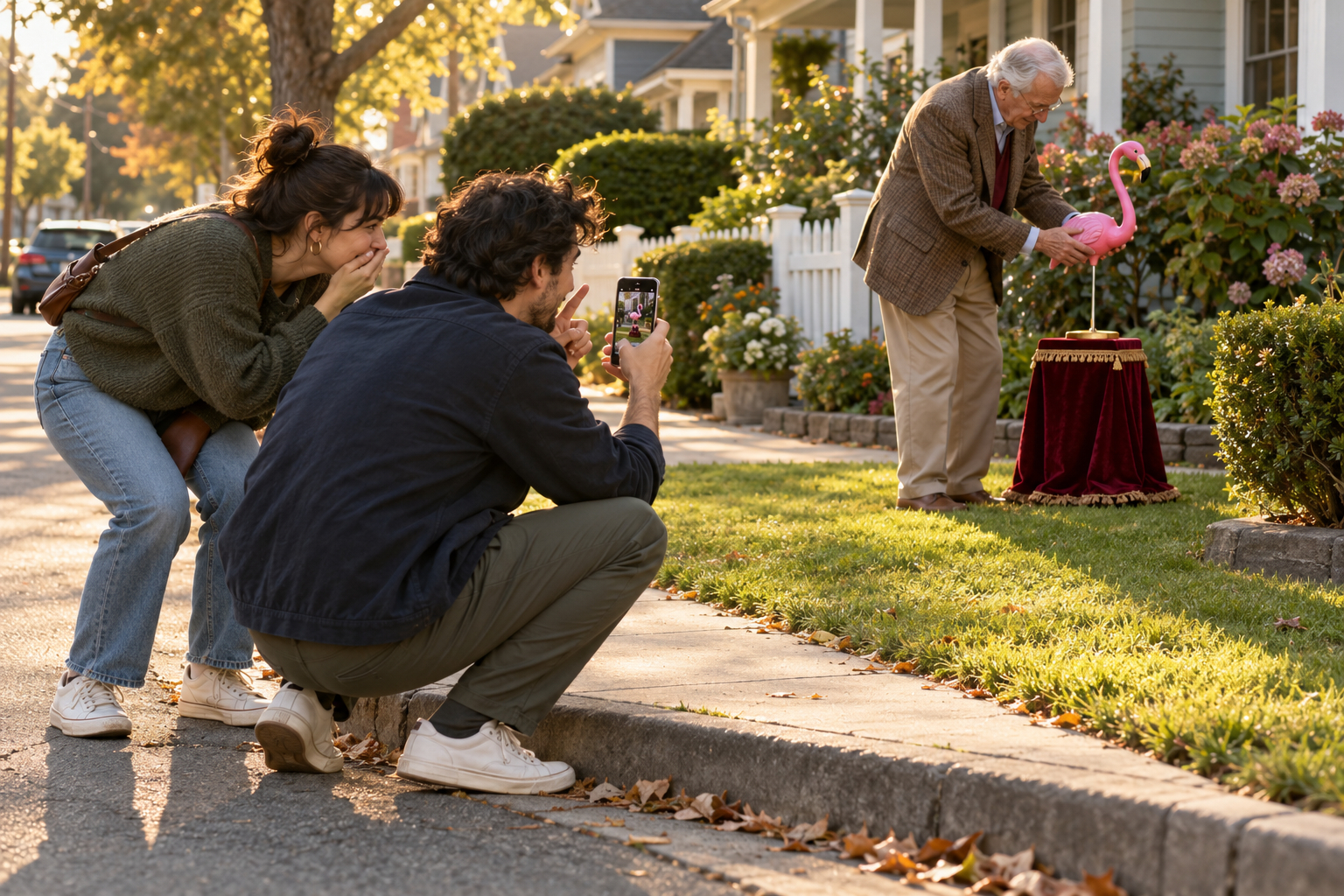
Great one-liners often begin as tiny observations you almost ignore: the barista’s overly formal goodbye, a grocery aisle that feels like a minor diplomatic negotiation, or a neighbor’s window display that reads like a personality test. Treat those scraps as raw material rather than distractions. Spend a little time each day noting one small, oddly specific thing and ask a simple question: what would be funny if this were true? That habit trains you to notice the incongruity that makes short jokes land.
Spot the Tiny Scene
Look for concentrated detail rather than long setups. Instead of describing an entire afternoon, focus on the one odd exchange or visual cue that sticks with you. Pay attention to contradictions: polite language paired with passive-aggressive actions, or mundane tasks done with dramatic seriousness. Those micro-contrasts are natural setups because the audience already recognizes the ordinary; your job is to tilt it slightly.
Keep a short list of recurring micro-themes you notice—petty rituals, awkward etiquette, small failures. Revisit them occasionally; repetition often hides a stronger, cleaner comedic angle. The more you catalogue, the faster you’ll spot a usable beat in the wild.
Shape It Into a Mini-Scene
Once you have a small moment, turn it into a scene with a quick setup and a narrowing focus. Name the expectation, then twist it. A classic move is to escalate one detail logically until the conclusion becomes absurd, or to deflate a dramatic tone with a mundane final image. Keep the scene tight: one or two images plus a clear emotional stance—annoyed, baffled, smug—will carry the joke.
Try short experiments: rewrite the setup from different perspectives, or force the scene into three rising beats. Those experiments sharpen what to keep and what to cut, which is everything in a one-liner.
Polish the Punchline
Edit ruthlessly for rhythm and surprise. Swap words to shorten the setup, then test whether the punchline still snaps. Often a single strong noun or precise verb makes an ordinary line funny. Read it aloud, time the pause before the final word, and tighten until the laugh hits without fuss. If a line needs explanation, it isn’t ready—strip context or change the image.
Finally, test in low-stakes places: a group chat, a short stage spot, or a caption under a photo. The immediate feedback will tell you whether the line is clean and unexpected or still carrying extra weight.
Conclusion
Regularly collecting tiny, specific moments trains you to see comedy in ordinary life. Shape those moments into tight scenes, then trim words until the punchline snaps. With short practice and quick tests you’ll build a steady supply of fresh one-liners.