
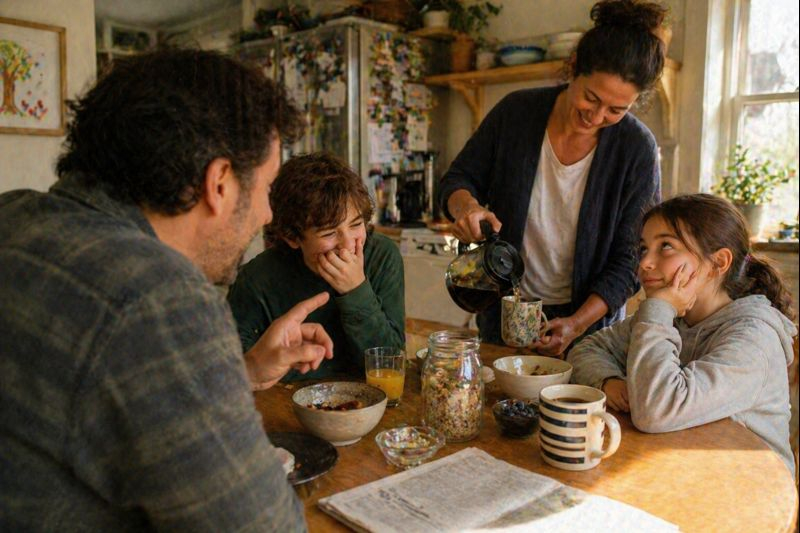
Small, corny jokes can do more than provoke a groan; they create predictable, lighthearted moments that bring people together. Delivered with sincerity, a short one-liner can defuse tension, add rhythm to routines, and invite a shared smile. For families juggling responsibilities, these tiny interruptions become memory markers—short, repeatable experiences that everyone recognizes. This piece outlines practical approaches to craft, time, and embed dad jokes into daily life without overdoing them.
Why simple jokes resonate
One-liners tend to land because they are brief, easy to process, and low risk emotionally. They signal playfulness and an intent to connect rather than criticize, which makes them more accessible across ages. Familiar formats like puns and obvious mismatch punchlines also allow listeners to anticipate and participate. That shared anticipation helps turn a single joke into an inside moment that recurs over time.
When a family accepts this kind of humor, it creates a predictable pathway for interaction. Those predictable moments help people relax and look forward to small, recurring signs of care.
Timing and delivery matter
Even the corniest line lands better when the timing feels natural and the delivery is relaxed. A short pause before the punchline, a deadpan tone, or a companion gesture can transform an ordinary line into a memorable beat. Reading the room matters: choose light moments rather than stressful or solemn ones. Practiced restraint prevents jokes from feeling forced.
Good timing shows awareness and respect for others’ moods. It also helps the joke become a pleasant surprise rather than an intrusion.
Keep jokes kind and age-appropriate
The most enduring one-liners avoid targeting individuals or sensitive topics and stay rooted in whimsy or wordplay. Tailor complexity to the audience: younger listeners enjoy concrete images and sounds, while teens may appreciate clever twists. Rotating themes keeps familiarity fresh without repeating the exact same gag. Being playful without mean-spiritedness preserves trust and encourages reciprocal humor.
Choosing kindness ensures that jokes invite smiles instead of awkwardness. It also models how to make others feel included through humor.
Create small rituals around jokes
Turning one-liners into simple rituals helps them stick—try a morning line over breakfast, an exit joke at bedtime, or a weekly groan-worthy round. Rituals make humor predictable in a comforting way and provide cues that life is lighter in that moment. Encourage participation so everyone feels welcome to contribute a line or two. Keep a short list to rotate through so novelty and recognition balance out.
Rituals build continuity and offer repeated chances for connection. Over time they become little anchors of warmth in busy schedules.
Conclusion
Simple dad-joke one-liners are tools for connection when used thoughtfully and kindly. With good timing, respectful content, and light rituals, they create shared moments that brighten routines. Practiced sparingly, these tiny jokes can strengthen everyday family bonds.