
Introduction
Dad jokes are more than simple one-liners; they offer an approachable way to teach timing, social cues, and playful confidence to children. When used thoughtfully, these short jokes create low-stakes opportunities for practice in conversation and laughter. This introduction outlines how gentle humor can be an educational tool for social learning and emotional ease. Read on for practical techniques and examples to incorporate playful jokes into everyday moments.
Why Dad Jokes Help with Social Timing
Short, predictable jokes make timing easier to learn because their structure is simple and repeatable. Children can observe pauses, emphasis, and facial expressions that signal when a punchline lands. That repetition builds an intuitive sense of conversational rhythm and helps kids recognize audience reactions. Over time, they learn to adjust delivery based on responses and context.
Introducing jokes in small, consistent moments supports steady learning without pressure. Keep the tone light and the stakes low so children feel safe experimenting with delivery and reactions.
Modeling Delivery and Reading the Room
Adults should demonstrate varied delivery: a dramatic pause, a wink, or an exaggerated groan after a punchline. These cues teach children how nonverbal signals affect a joke’s reception and when to hold back. Show them how to notice who is listening and when a joke may not be appropriate, emphasizing empathy and respect.
- Use short, family-friendly lines.
- Celebrate both the laugh and the groan.
- Discuss when a joke might not fit the mood.
By narrating your choices—why you paused, why you stopped—you turn moments of humor into clear lessons about social awareness.
Practice Techniques That Encourage Play
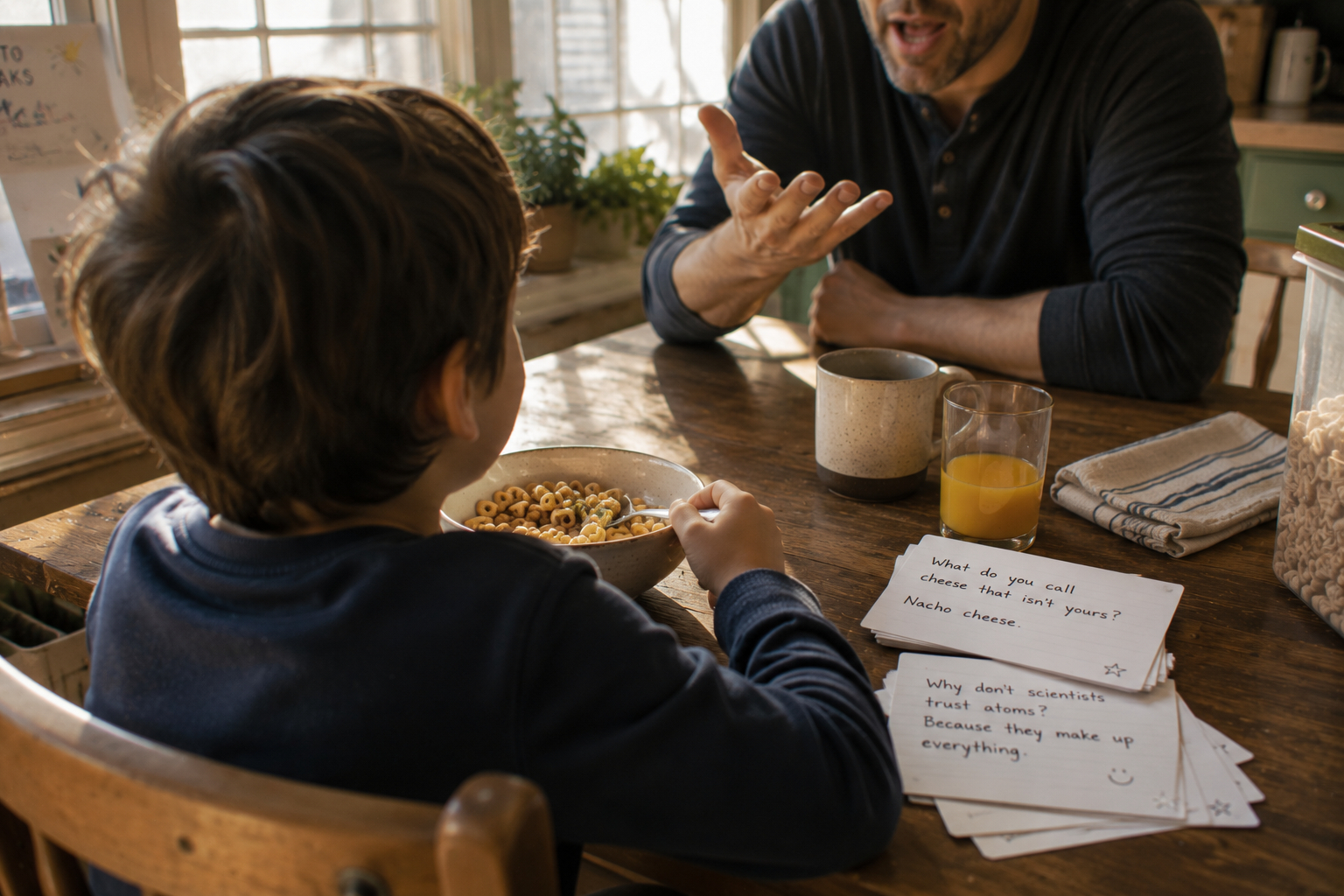
Create mini-practices: a daily joke at breakfast, a playful competition for the corniest line, or a cliffhanger pause that invites guesses. These routines provide predictable opportunities for kids to try delivery and timing repeatedly. Pair practice with positive feedback focused on effort and awareness rather than perfect punchlines.
Encouraging improvisation helps children build confidence and creativity, while keeping expectations light helps them enjoy the process without fear of making mistakes.
Practical Examples and Conversation Prompts
Offer prompts that guide timing: ask your child to pause before the last word, or try delivering a punchline with different tones. Share examples like puns or silly one-liners that are easy to memorize and adapt. Use role-play to switch roles between teller and audience so kids experience both sides of timing.
These exercises turn casual humor into structured learning moments that reinforce social skills over time. They also keep interactions fun and connected.
Conclusion
Using dad jokes as teaching tools helps children learn timing, empathy, and conversational rhythm.
Small, playful routines let kids practice delivery in a safe environment.
Over time these light moments build confidence and stronger social awareness.