
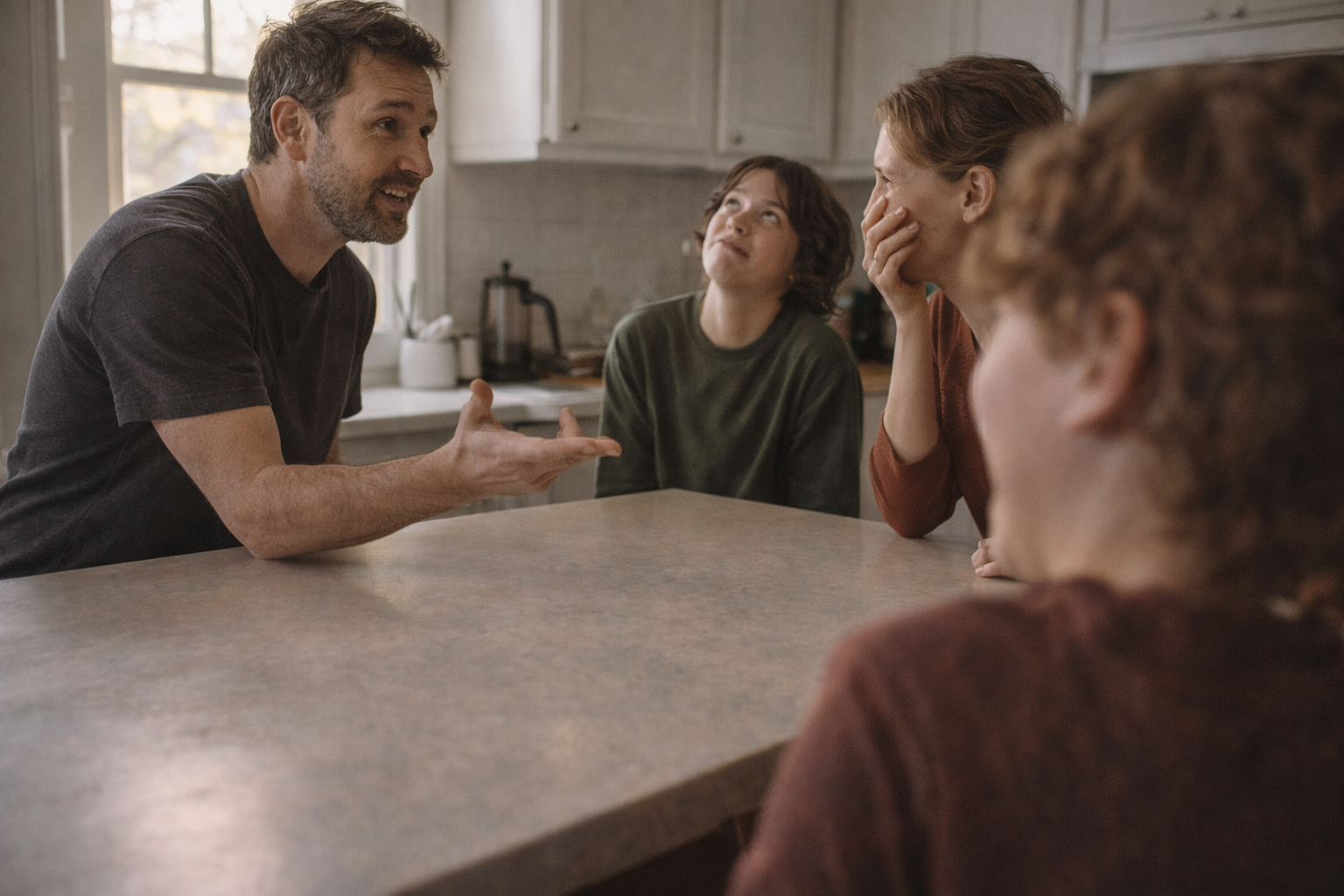
Dad jokes are a simple form of humor that blends predictability with surprise.
They rely on puns, wordplay, and gentle misdirection rather than sharp irony.
Because they are low-stakes and widely accessible, dad jokes can land in many social settings.
Understanding why they stick around helps you use them more effectively to lighten the mood.
Why they work
At a cognitive level, dad jokes produce a brief mental mismatch: listeners expect one meaning and then an alternate, often silly meaning arrives. That quick shift triggers a mild surprise and a tiny reward response without causing discomfort. Socially, the jokes are inclusive; they require no special knowledge and often invite groans and shared eye contact. Those shared reactions build a subtle sense of group belonging.
Because the impact is light, the social cost of failure is low. That encourages repetition and helps the pattern stick in family culture.
Timing and tone
Timing is central: a well-placed one-liner after a small win or during a tense moment can defuse pressure. Tone matters too—delivered with warmth and self-awareness, a corny line signals friendliness rather than mockery. Matching the audience’s mood and avoiding sensitive topics preserves goodwill. Pausing just long enough for the misdirection to register improves the payoff.
Practice helps develop an intuitive sense of when to jump in. Observing reactions lets you fine-tune delivery over time.
Practical tips to try
To make dad jokes feel natural, start small and read the room. Keep jokes brief and avoid complex references so members of different ages can follow. Use self-deprecating lines occasionally to show you don’t take yourself too seriously. Rotate favorites so material feels fresh instead of recycled.
- Pick moments after small achievements or light transitions.
- Keep it light and avoid personal jabs.
- Use a slight pause before the punchline to improve timing.
A few simple habits will make humor a predictable and welcome part of daily life. That consistency turns occasional laughs into a shared language.
Avoiding common pitfalls
Even gentle humor can misfire if repeated excessively or used to dodge important conversations. Pay attention when listeners withdraw or respond with silence; that’s a cue to stop. Avoid jokes about sensitive topics and never weaponize humor to belittle others. Respect and timing protect the relationship more than any clever punchline.
When in doubt, ask or apologize and move on. The goal is connection, not constant performance.
Conclusion
Dad jokes last because they are small, safe social tools.
Used thoughtfully, they create shared moments and loosen tension.
Keep timing, tone, and respect at the center.