
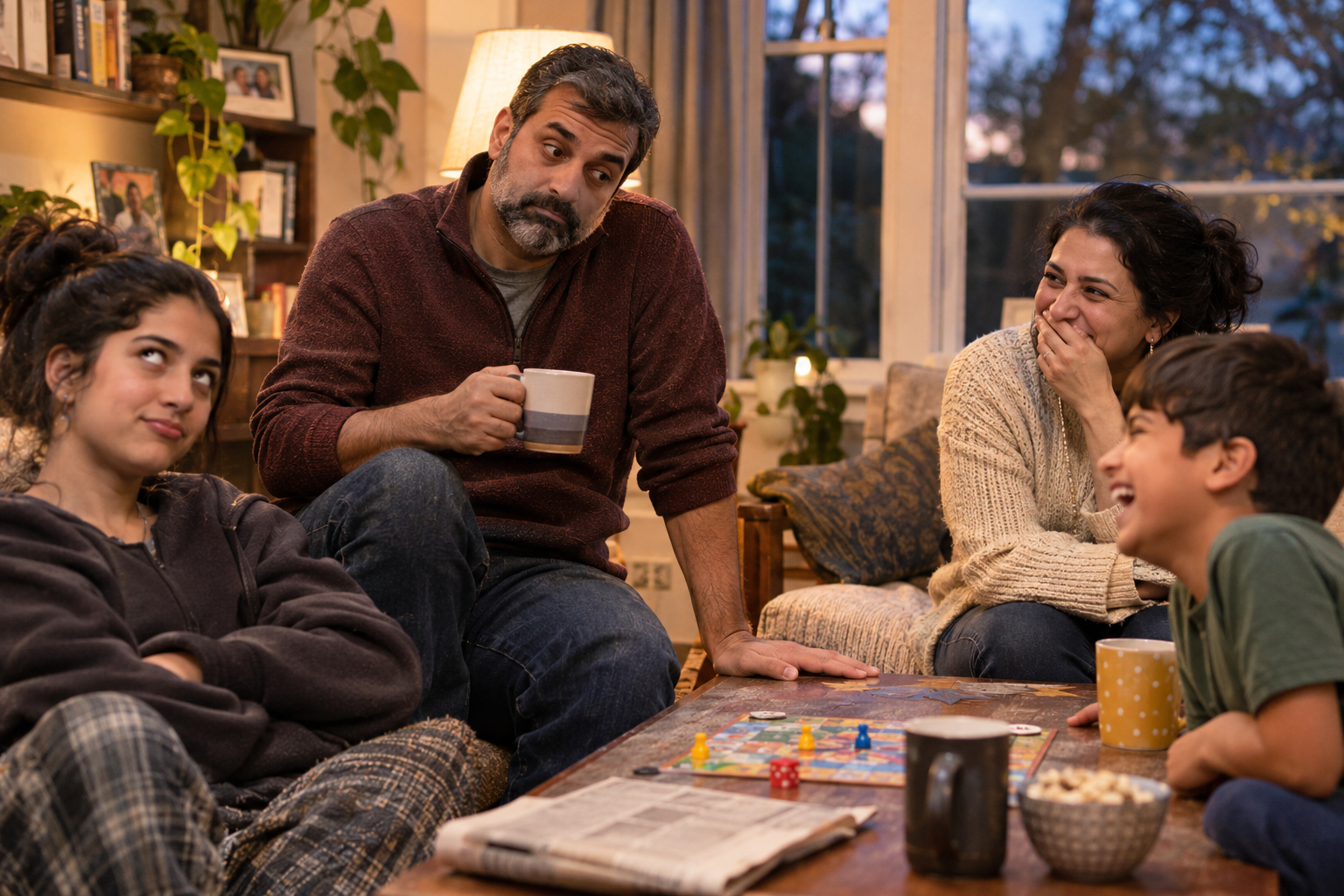
Dad jokes are small, deliberate interruptions — a pause in the day that invites a groan and often a grin. They work best when they feel effortless rather than rehearsed, a tiny curious sound in a larger conversation. Done well, a one-line pun softens a tense edge or makes a slow moment unexpectedly bright. Getting there takes attention to timing, tone, and a light willingness to be a little silly.
Pick the right moment
The best groan-worthy lines arrive when the room is relaxed or when a little levity is welcome, not during a serious discussion or after bad news. Look for natural beats: a lull in conversation, a collective eye-roll approaching, or a small household mishap that could use a gentle pivot. A well-timed quip can steer attention and reset the mood without undermining what’s important. Notice how others react to smaller jokes first and scale up gradually.
Start modestly and test the waters before committing to a louder punchline. Matching the joke to the situation keeps the moment feeling generous rather than disruptive. If people are open, the payoff is immediate and effortless.
The soft art of delivery
Delivery is half the joke: a steady voice, a slight pause, and no over-explanation preserve the charm of the line. Keep facial expressions minimal; the contrast between a deadpan delivery and a silly line often produces the best response. Avoid rushing; letting the listener fill that brief silence makes the punchline land cleaner. Simplicity wins—choose lines that are short, clear, and easy to repeat.
Let the laugh—or the groan—stand on its own rather than chasing approval. If someone smiles quietly, that’s just as much a win as a full guffaw. The point is a shared moment, not a performance.
Recovering when a joke flops
Not every attempt will land, and a smooth recovery keeps the vibe intact. A quick self-aware line like a cheerful shrug or an exaggerated bow turns a miss into part of the routine. Sometimes admitting that the joke was terrible invites the room to laugh at the flop instead of at you. That flip from awkward to communal can become its own little family tradition.
If a joke clearly landed poorly, move on with something ordinary—change the subject, offer a small task, or ask a question that invites someone else into the conversation. The goal is to keep warmth in the room, not to insist on applause.
Conclusion
Mastering a perfect dad joke is more about listening than memorizing lines. When you pay attention to moment and tone, a tiny pun can create a durable, affectionate habit. Keep it light, and let the occasional flop be part of the fun.