
One-liners live or die on a single, unexpected detail. Keep the observation small, the angle sharper, and the language spare. A quick revision often turns a shrug into a chuckle. This short piece offers practical moves you can apply today.
Find the small truth
Start with an honest, tiny observation: the weird button placement on a remote, the way toast always flips butter-side down, the proud way a plant leans toward a window. Those small truths feel familiar, and familiarity is your setup. Avoid grand premises that need explanation; the audience should recognize the scene within a heartbeat. When people nod, they’re already halfway to laughing.
Focus matters more than originality at first. If an idea is relatable and specific, it will breathe life into a short punchline. Keep hunting for details that everyone has seen but few have put into words.
Choose a clean twist
The punchline should shift the frame briefly: a contrast, an unexpected comparison, or a literal interpretation of a metaphor. Make that twist concise and decisive — no dangling clauses or second thoughts. Strong one-liners often hinge on a single word that reframes the setup, so pick your verbs and nouns with intent. Rhythm helps: the surprise lands better when the sentence has a clear start and sharp finish.
Resist over-explaining. If a twist requires more setup than the joke itself, it’s probably a longer sketch, not a one-liner. Keep the turn tight and let the reader fill in the rest.
Trim, test, and time
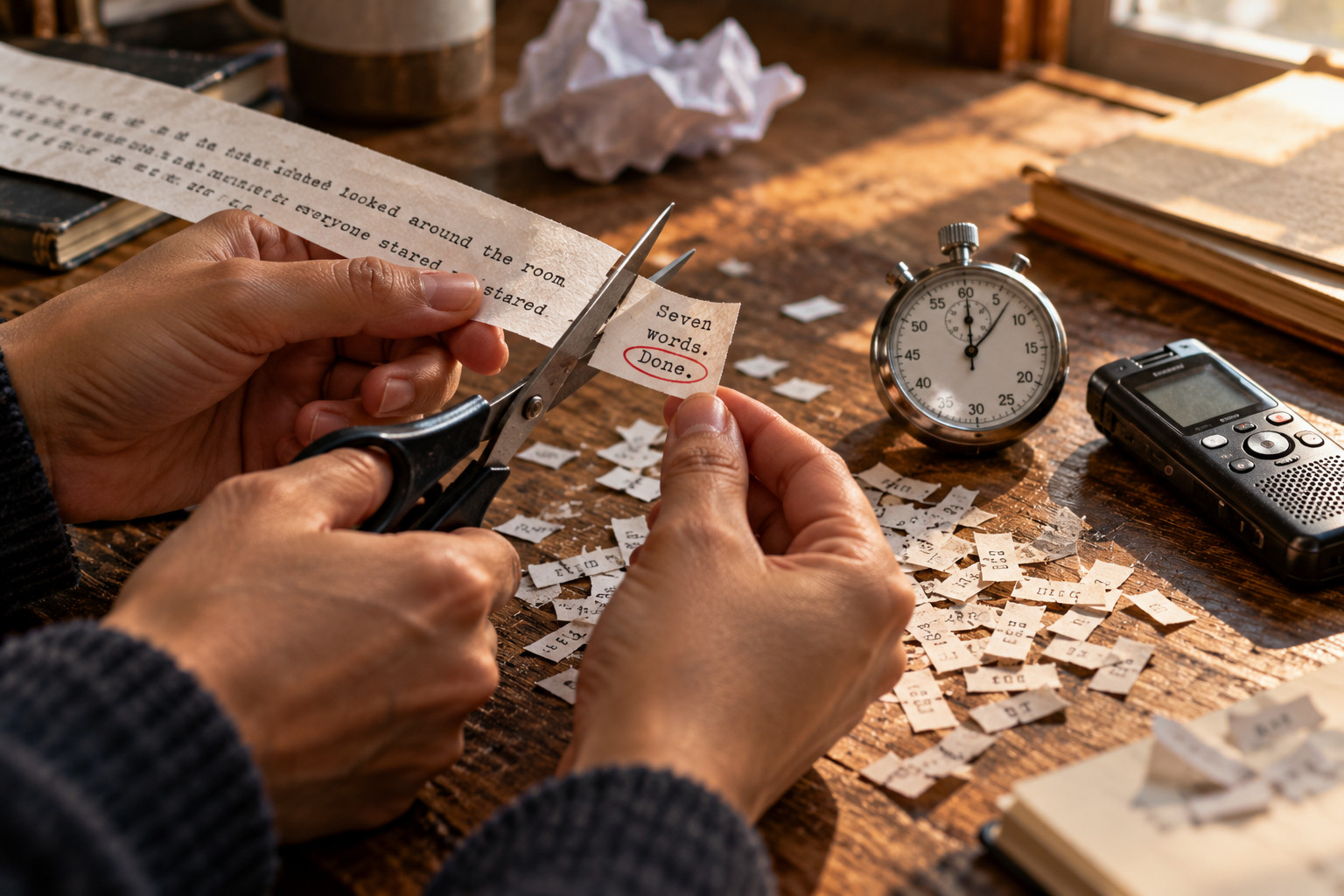
Edit ruthlessly: remove any word that doesn’t pull its weight. Read lines aloud to catch awkward rhythm and test different word orders for punch. Try swapping a noun, shortening a clause, or tightening a pause; small edits often change everything. Timing matters too — the same line can land differently depending on where it appears in a feed or conversation.
- Shorten: cut adjectives and qualifiers.
- Shift: move the surprise word toward the end.
Share a handful of versions with friends or on social feeds and note which gets the most instant reaction. Iterate until the laugh comes fast and clean.
Conclusion
One-liners thrive on precise observation, a clear twist, and ruthless editing.
Try a short habit: collect odd details, twist them, then trim without mercy.
Small daily practice yields lines that land more often and travel further.