
Short quips work because they ask for almost no patience from the listener.
They live on compression: one clear image, one small surprise.
You can learn to write them by noticing odd little details and trimming away anything extra.
This piece gives a few practical moves to write quips that feel fresh and land more often.
Trim to the Essential
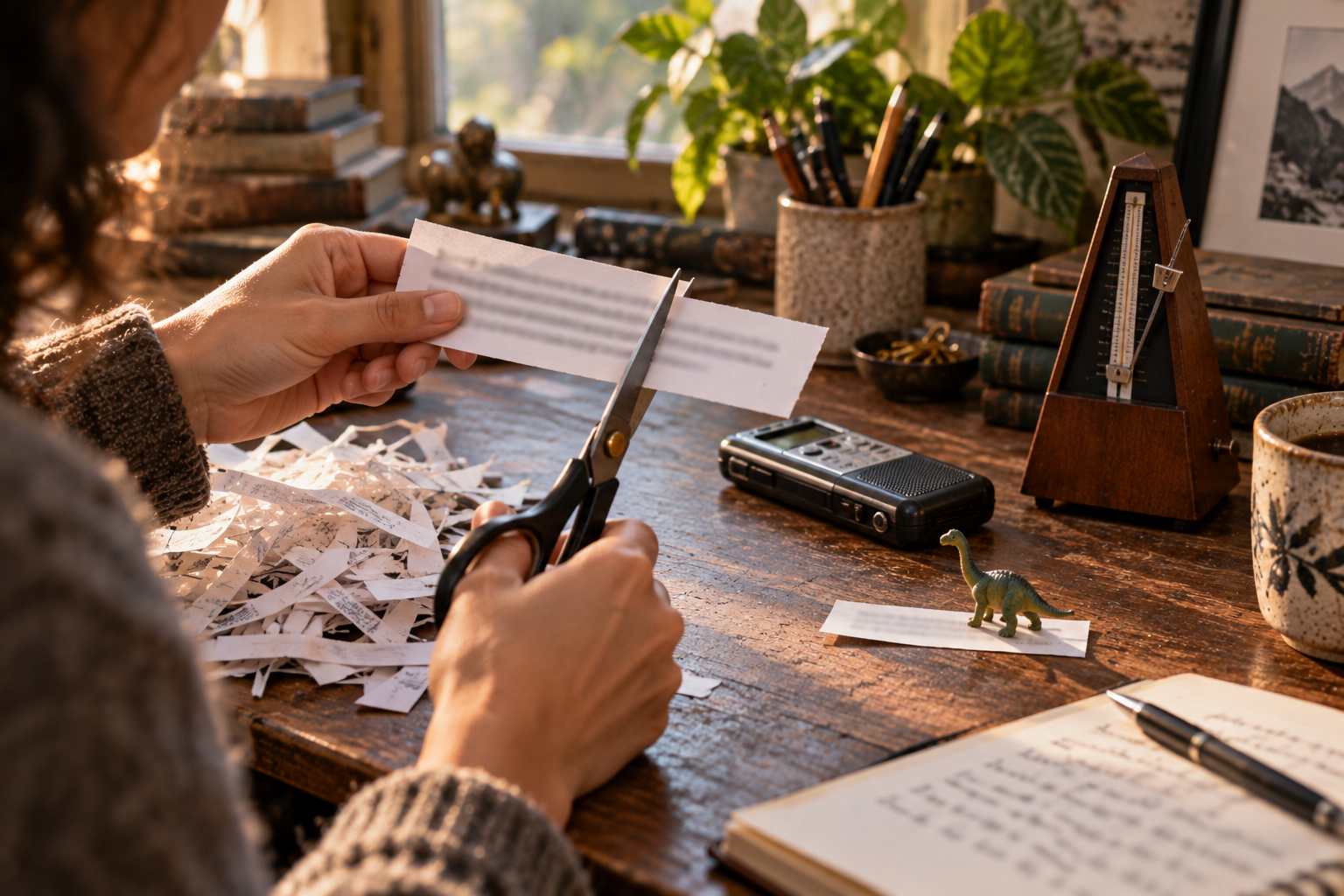
Start by shrinking the setup until every word earns its place. If a line survives a literal cut test — remove it and see whether the line still works — it might not belong. Small quips need immediate clarity; clutter kills the tiny misdirection that makes a joke land. Aim for verbs and concrete nouns rather than vague adjectives to keep the image sharp.
- Before: “I enjoy long walks.” After: “I enjoy walks. Mostly to the fridge.”
- Before: “Technology is moving fast.” After: “My phone updates itself faster than I update my life.”
- Before: “I need coffee sometimes.” After: “Coffee: proof I can bribe myself into productivity.”
Try rewriting a favorite headline or status with this ruthless cutter. The tighter the setup, the louder the tiny twist will feel.
Plant a Small Surprise
A quip needs a pivot — a tiny mental step the reader wasn’t expecting. That pivot can be a word that shifts meaning, a sudden reframe, or an absurd image inserted at the last moment. The key is to make the setup ordinary enough to lower expectation, then deliver the twist quickly. Subtlety often lands better than an obvious one-liner, because the reader supplies part of the joke.
Test different pivots and keep the one that makes readers pause and then smile. It’s the gap between expectation and delivery where the laugh lives.
Listen for Rhythm and Cut Again
Say the quip out loud and feel its breath: too long, and the listener forgets the lead; too choppy, and it feels forced. Pay attention to syllables and natural speech, trimming words that trip the cadence. Repetition and parallel structure can help, but use them sparingly so the final line snaps. When in doubt, record yourself and edit until the line sounds like something you’d actually want to share.
- Remove filler words: really, very, just.
- Swap passive phrases for active verbs.
- Cut any image that requires explanation.
Small performance tweaks can turn a decent quip into a memorable one. Practice reading and tightening until sharing feels effortless.
Conclusion
Short quips are a craft you sharpen in tiny edits.
Keep setups lean, plant a modest twist, and listen for rhythm.
With a few daily rewrites, you’ll build a pocketful of lines ready to land.