
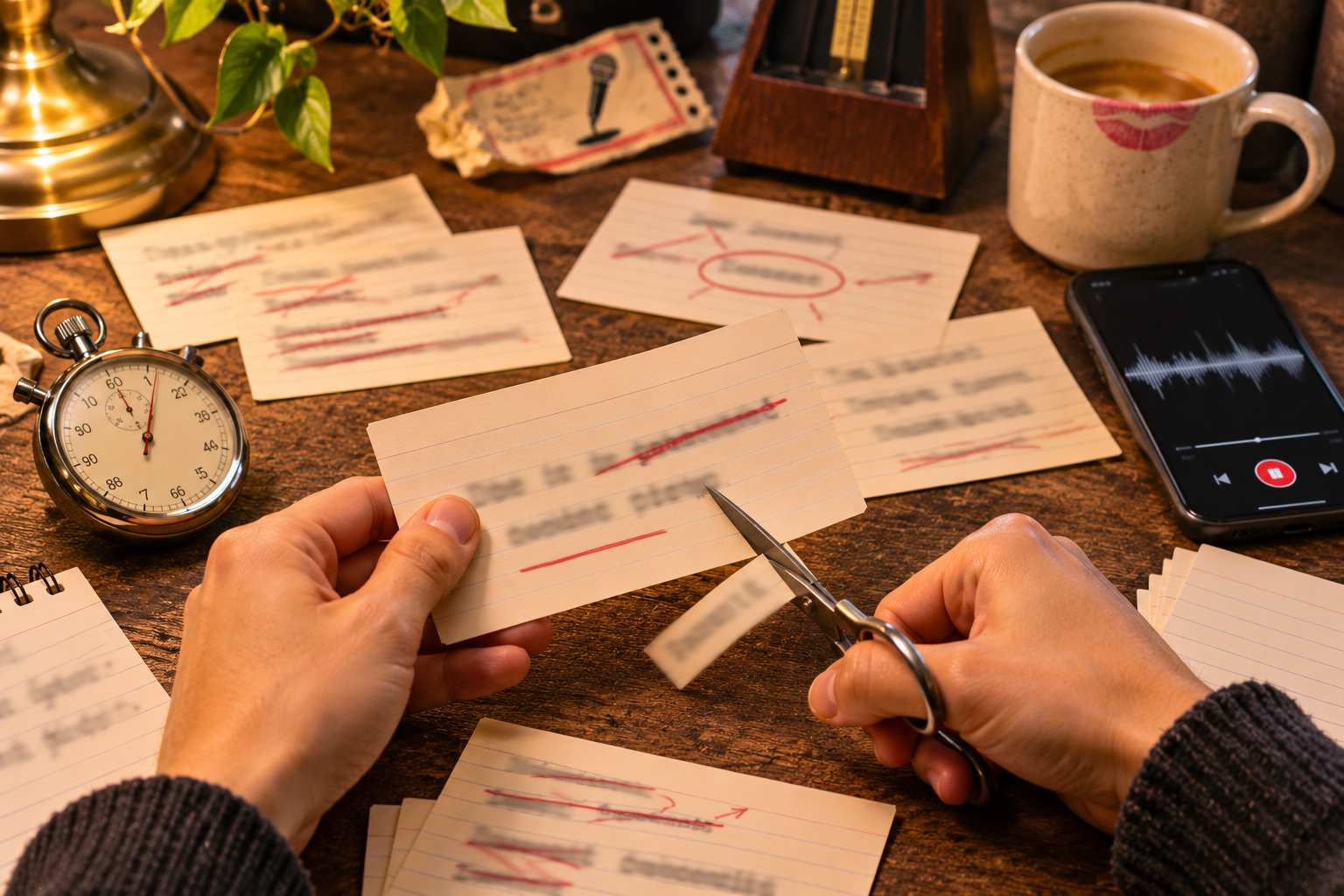
Quick punchlines live where clarity meets surprise and land in a single breath. A tight setup, a clear misdirect, and clean rhythm do most of the work, and a confident tone helps push it over the top; little else should clutter the line. Posting on a feed or slipping a remark into conversation, small adjustments change how often a line lands. Here are practical moves you can test on your next one-liner.
Trim the Setup
Short setups leave room for a punch that hits. Aim for one or two clear details that the audience will accept without extra mental work. Remove adjectives that don’t add meaning and cut anything that repeats the obvious; every extra word dilutes the payoff. Tightening the beginning also makes the punchline read faster and feel sharper, and increases the surprise-to-setup ratio.
- Keep subject and situation specific but compact.
- Replace phrases with single vivid nouns when you can.
- Test by deleting a word and seeing if the joke still reads.
After a cut, read the line aloud and time the pause before the punch. If the setup stumbles, it needs another trim.
Pivot with a Clean Surprise
The pivot is where expectation collapses — it should be obvious and then flipped. Lead the audience down a predictable path, then give them a concise alternative that reinterprets what they already know. Avoid complex logic or long detours; the surprise works best when it’s instantly relatable. A crisp pivot makes even gentle observations feel mischievous.
Because the switch must register fast, choose contrasts people can visualize quickly. Small semantic shifts often outperform elaborate contrivances and age better across audiences.
Polish Rhythm and Sound
Timing in text comes from rhythm: syllable count, punctuation, and breathing points. Break lines where the audience would naturally inhale or where a short pause heightens the punch. Repeat sounds sparingly for emphasis but avoid rhymes that sound twee unless that’s the point. Read your one-liner into a phone or aloud to catch awkward stress patterns.
- Try varying sentence length to create a surprise pause.
- Use commas and dashes deliberately to control cadence.
Small adjustments to punctuation and word order can transform a flat line into a crisp one. Make changes, test the laugh, and keep what snaps. Repeat what works and retire what doesn’t.
Conclusion
One-liners improve faster by editing than by drafting more. Focus on trimming, sharpening the pivot, and tightening rhythm to see immediate gains. Keep testing in short bursts and collect what consistently gets a laugh.