
Introduction
One-liners are a compact form of humor that rely on precision, surprise, and economy of words.
They work best when the setup and payoff fit into a single, clean sentence.
This article offers practical strategies to sharpen your punchlines and make them memorable.
Read on to learn tips for writing, structuring, and delivering effective one-liners.
Keep It Short and Specific
A one-liner succeeds when every word earns its place, so trim anything that doesn’t push the joke forward. Aim for concrete images or verbs that anchor the listener quickly, and avoid vague abstractions that slow the mind. Specificity gives the audience a clear target for the twist, and brevity increases the impact of the unexpected turn. Editing ruthlessly often transforms a decent line into a punchy gem.
Test variations of the same idea with different word choices to see which version lands hardest. Small changes in rhythm or diction can make a big difference, so iterate until the line feels inevitable and surprising at once.
Structure the Unexpected
Most effective one-liners set up an expectation and then subvert it with a concise payoff. Practice common structures like misdirection, double meaning, and contrast; each framework offers a reliable route to surprise. Use reversal to flip a mundane truth into humor, or exploit ambiguity with a clever double entendre. Awareness of these frameworks helps you build lines that feel both natural and surprising.
- Try juxtaposing two unrelated ideas to create a sudden mental shift.
- Use parallel structure to lull the listener before switching directions.
Keep the setup short and the payoff immediate so the audience makes the connection quickly. When the brain completes the pattern fast, the laugh follows naturally.
Delivery and Timing
How you say a one-liner is as important as what you say; rhythm, pause, and facial cues all influence reception. A well-timed pause before the punch gives the audience a moment to anticipate and then be surprised. Practice different cadences and note which timing draws the cleanest response. Also consider the audience and context—some lines need softer delivery, others thrive on deadpan or rapid-fire energy.
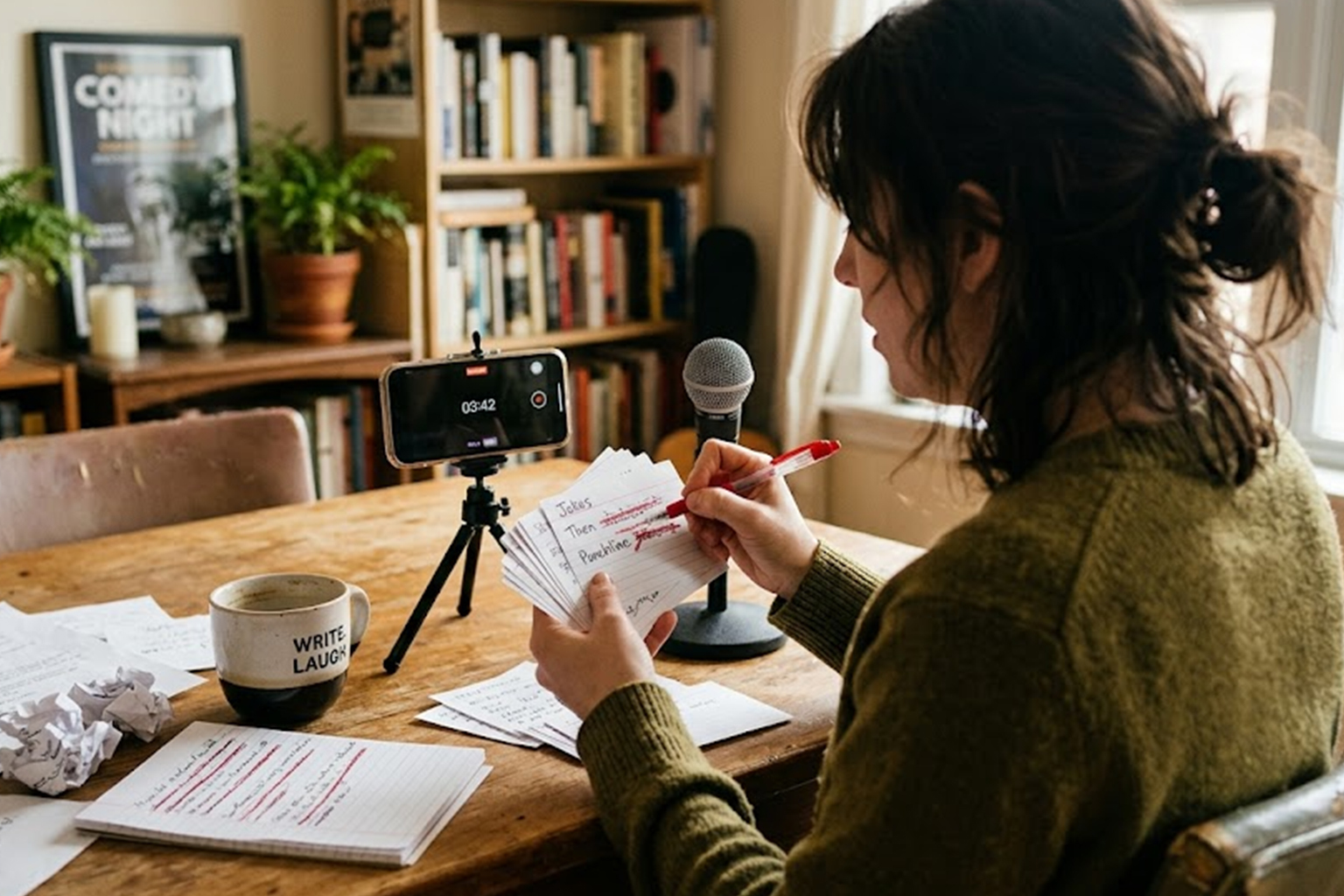
Record yourself and listen back to spot places where a breath or a quicker word would improve the line. Rehearsal builds muscle memory so timing becomes instinctive on stage or in conversation.
Conclusion
Polish each line with ruthless editing and practice timing until delivery is effortless.
Test material in low-stakes settings and refine based on real reactions.
With patience and pattern awareness, your one-liners will land more often and feel sharper.