
Introduction
Dad jokes get a lot of attention for their groan factor, but they serve a useful social role beyond the eye roll. These simple, pun-based quips often bridge awkward silences, lighten moods, and create shared moments. Learning to deliver them well is a small skill that pays off in rapport and timing. This article explores why dad jokes work, how to craft them, and where they fit best.
Why Dad Jokes Work
At their heart, dad jokes rely on surprise through harmless wordplay and misdirection. The punchlines are predictable enough to be accessible but clever enough to trigger a smile. They minimize social risk, making listeners more comfortable and more likely to respond. In group settings a well-timed one-liner can defuse tension and invite shared laughter.
Because they are short and clean, dad jokes cross generational lines. Their simplicity is a strength when the goal is connection, not showcasing wit.
How to Craft a Good Dad Joke
Start with a familiar phrase or common object, then look for alternate meanings or sounds. Keep the language simple and the rhythm steady so the setup doesn’t overwhelm the punchline. Puns work well when they feel inevitable in hindsight; avoid forced wordplay that requires explanation. Test the line silently to see whether it reads as clever or merely confusing.
Delivery matters: timing, eye contact, and a small pause before the payoff amplify the effect. Practice makes the timing feel natural rather than rehearsed.
Using Dad Jokes at Home and Work
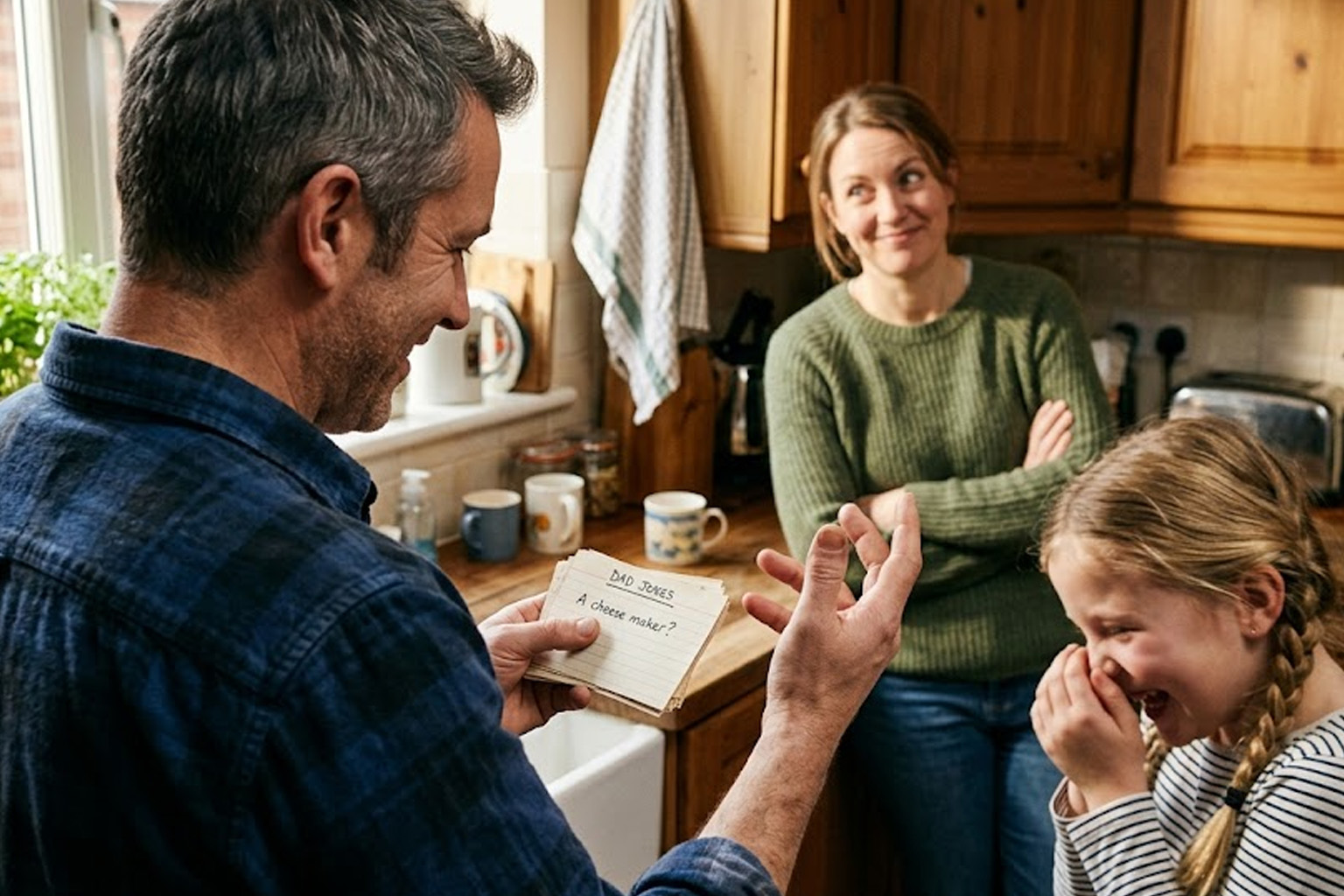
At home, dad jokes can create rituals that kids and partners anticipate, turning ordinary moments into playful exchanges. In professional settings, choose family-friendly material and be mindful of context; what lands at a kitchen table may not suit a meeting. Use self-deprecating timing or quick segues to keep the tone light without derailing the conversation. Observing reactions helps you calibrate frequency and style.
When in doubt, a short smile and a gentle delivery keeps humor inclusive. The goal is connection, not domination.
Common Mistakes to Avoid
Avoid overusing dad jokes to the point they become background noise rather than highlights. Forcing a pun into an unrelated conversation can feel awkward and reduce your credibility. Steer clear of jokes that punch down, accidentally insult, or rely on obscure references. Remember that humor should lift the mood, not create discomfort.
When unsure, keep it brief and non-controversial. A single well-placed joke beats a string of forced attempts.
Conclusion
Dad jokes are a small, versatile tool for building connection. Their strength lies in simplicity and timing. Use them thoughtfully to spark smiles and shared moments.