
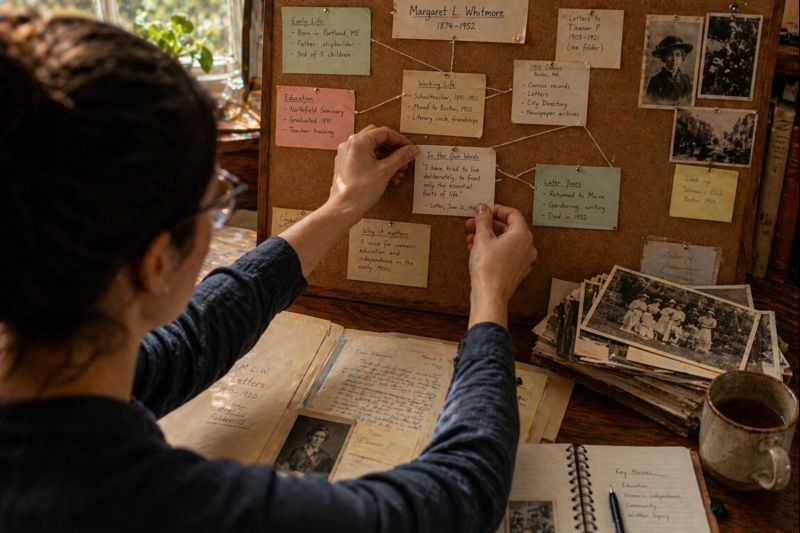
Short biographies require careful choices about what to include and what to leave out.
They demand attention to context so small details gain meaning rather than feeling arbitrary.
Good compact portraits balance evidence, interpretation, and an awareness of historical silence.
This article outlines practical steps for producing concise, responsible life sketches.
Why Concision Matters in Biography
Concise biographies make historical individuals accessible to readers with limited time while preserving analytic depth. They focus on a small number of themes or turning points to reveal character and circumstance. This economy forces writers to prioritize sources and to be transparent about gaps and uncertainties. When done well, short profiles can illuminate broader social patterns through one person’s experience.
To achieve clarity, select a framing question that guides which facts you include. That frame helps readers understand why the life matters and what claims the sketch supports.
Working with Limited and Fragmentary Sources
Most short biographies rely on uneven records: letters, census entries, a newspaper notice, or surviving legal documents. Assess each source for provenance, purpose, and potential bias before treating it as evidence. Cross-check details where possible and note where conjecture is necessary rather than presenting it as fact. Being candid about limits strengthens credibility and invites further research.
Create a simple source map to track what supports each claim and what remains speculative. This practice keeps narrative choices accountable to the evidence.
Balancing Narrative and Analysis
A short life portrait should blend narrative flow with analytical context so the reader understands both events and their significance. Use a tight chronological arc or thematic sections to avoid drifting into irrelevant detail. Explain why particular incidents mattered for the subject’s trajectory and for larger social or cultural questions. Keep sentences direct and avoid unnecessary jargon that can obscure meaning.
Every anecdote should serve the framing question you established in the introduction. Trim any material that doesn’t advance interpretation or illuminate motive.
Ethics, Empathy, and Representation
Even brief biographies carry ethical responsibilities: to represent subjects respectfully, to acknowledge power imbalances, and to avoid speculation that reinforces stereotypes. Consider whose voices are absent and how that absence shapes the narrative you produce. Where identity markers are uncertain, be clear about the limits of what can be known. Thoughtful humility improves both scholarship and reader trust.
Invite readers to see the subject as both shaped by context and as an agent within it. That balance fosters empathy without sacrificing critical distance.
Conclusion
Short biographies demand precise choices about sources, structure, and interpretation.
They work best when framed by a clear question and when limitations are acknowledged openly.
A disciplined, ethical approach yields portraits that are both informative and respectful.