
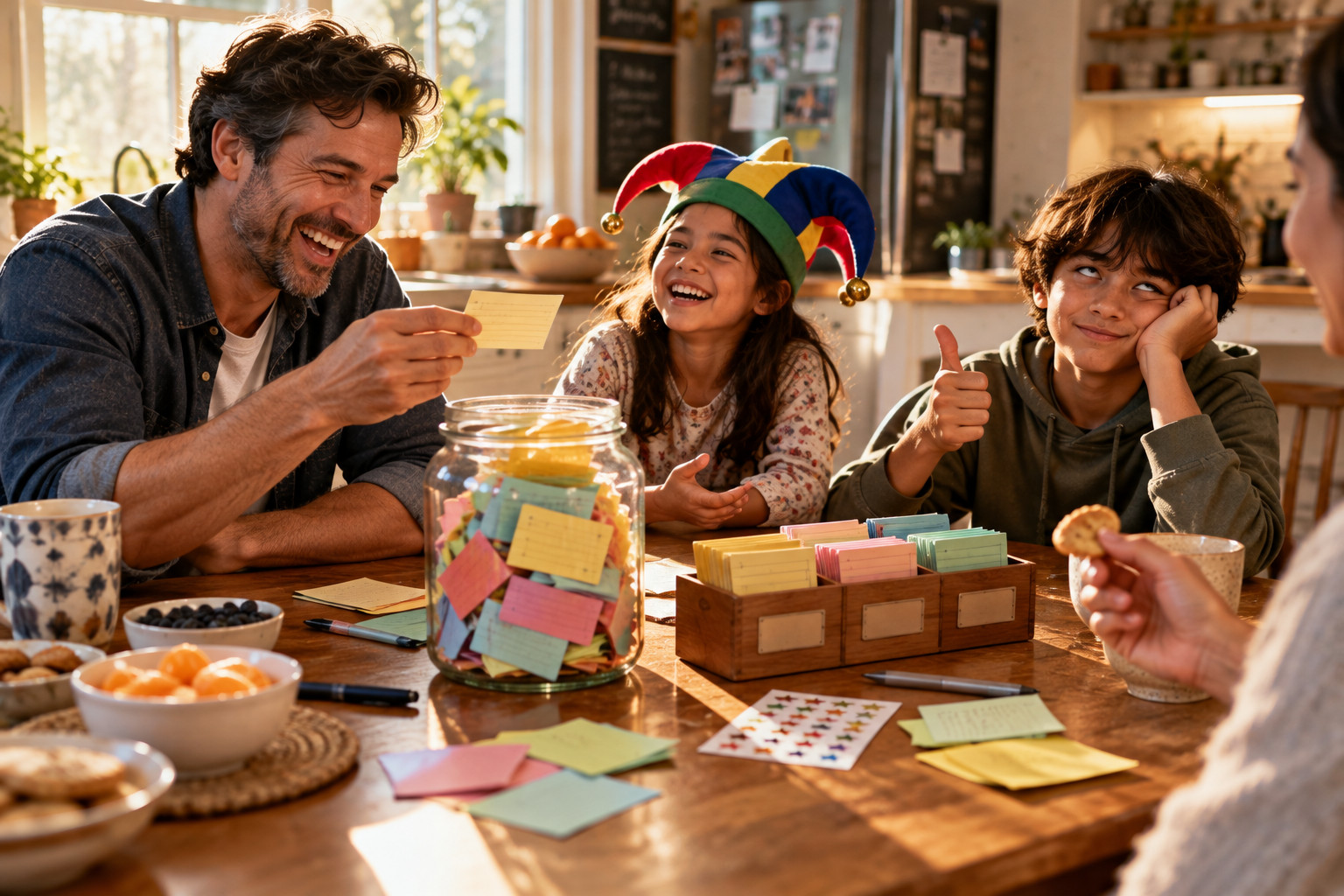
A ‘pun bank’ is a simple place to store short, silly jokes the family can draw on. It turns random groan-worthy lines into small shared moments without pressure to be funny on the spot. Start with a jar, a note app, or an index-card box and aim for handfuls of quips that suit different moods. This approach keeps humor light and makes it easier for everyone to join in.
Building the Pun Bank
Collecting jokes should feel playful, not performative. Invite each family member to add one or two lines each week — puns, one-liners, and harmless dad jokes all count. Label cards by occasion: morning pick-me-ups, road-trip groaners, or dinner table hits. Keep entries short so they’re easy to read aloud and quick to land.
Store them where the family gathers. A visible jar or a shared notes folder helps the habit stick.
Make It a Tiny Ritual
Rituals give the pun bank a purpose. Choose moments—after breakfast, during car seat buckling, or at bedtime—to pull a joke and pass it around. Rotating who delivers the line turns it into a low-stakes performance everyone can practice.
Keep the timing brief and playful so it doesn’t take over conversations. Celebrate the groans as much as the laughs.
Teach the Gentle Rules
Jokes land better when everyone agrees on boundaries. Set simple rules: no jokes that single out someone, avoid sensitive topics, and let kids veto anything that makes them uncomfortable. Encourage a light reaction—smile, groan, or a thumbs-up—to keep feedback supportive. Explain that timing matters: some moments call for quiet, others for levity.
Revisit the rules as kids get older and tastes change. Small adjustments keep the bank welcoming.
Rotate and Refresh
To avoid stale material, schedule a weekly sweep to retire tired lines and add fresh ones. Encourage creativity with themes, like animal puns or seasonal jokes, and let kids invent their own. A little editing keeps the collection lively.
Archive the classics so they’re never truly lost. New entries keep everyone curious.
Use Props and Rewards
Little props and light rewards make the pun bank more tangible. Stickers for a well-timed delivery, a silly hat for the ‘joker of the day’, or a small snack can turn participation into something kids remember. Don’t make rewards the point—keep them occasional and fun so the jokes themselves stay the draw. Props encourage shy family members to step forward and try a line or two.
Use rewards sparingly to avoid pressure. The goal is shared amusement, not competition.
Conclusion
Treat the pun bank as a tiny, everyday practice rather than a performance test. Over time it creates small, repeatable moments of connection that don’t demand perfect timing. Keep it kind, short, and silly.