
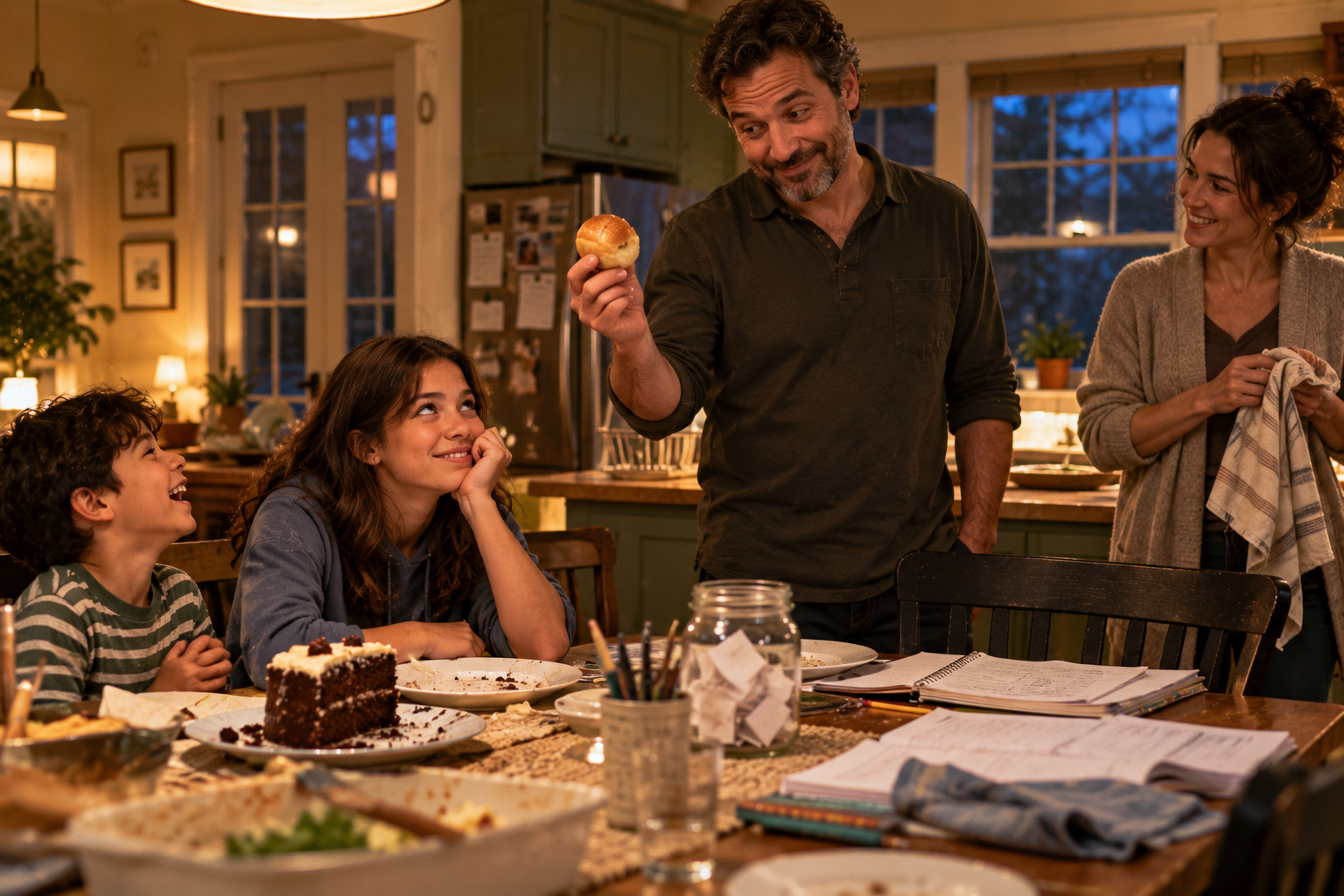
Dad jokes are tiny interruptions in a busy day: a single pun, a silly rhyme, a deliberately obvious punchline. When placed correctly they break tension, invite a shared eye-roll and, surprisingly, create a warm moment that lingers. Done poorly they flop, but done well they become part of family rhythm. The trick is less about the joke itself and more about timing and delivery.
Why short, corny jokes work
Short jokes demand almost no emotional investment, which makes them low-risk social tools. They aren’t trying to teach or impress; they simply ask others to join a tiny, light exchange. That minimal ask reduces defensiveness and opens channels for follow-up conversation or playful teasing. Over time, these micro-moments add up into an easy atmosphere where people feel comfortable speaking up.
Because they’re predictable and safe, groan-worthy lines give everyone permission to laugh at themselves. That shared permission is social glue: it lowers stress and makes everyday tasks feel less mechanical. A quick joke can change the tenor of a room without derailing what needs to happen next.
How to time a dad joke well
Reading the room matters more than the joke. A quiet, focused household during homework isn’t the same as the kitchen after dinner; choose moments when people can respond without pressure. Keep delivery casual — a brief smile and a flat tone often land better than theatrical antics. If someone looks tired or upset, save the quip for later or offer a gentle, empathetic line instead.
Think of jokes as light seasoning: a little at the right moment enhances the meal, too much overshadows it. Rotate your material so familiar lines feel like a family tradition rather than a stale routine. When a joke does fall flat, a simple, good-natured shrug and move-on keeps the mood intact.
Quick, low-risk examples
Having a small stash of one-liners for different situations makes it easier to drop a joke without overthinking. Keep a few breakfast puns, a couple of road-trip classics and a handful of harmless workplace groaners that kids can repeat. Short, imageable lines often work best because they’re easy to remember and share.
- Breakfast: “I’m on a seafood diet. I see food and I eat it.”
- Morning: “I used to be a baker, but I couldn’t make enough dough.”
- Road trip: “What do you call a factory that makes okay products? A satisfactory.”
- Chore time: “I’m reading a book about anti-gravity — it’s impossible to put down.”
- Encouragement: “You’re on a roll — like this pun.”
Rotate these and adapt them to your family’s taste; some will earn groans, others smiles. Keep it short, then return to whatever you were doing so the moment feels natural.
Conclusion
A well-timed pun is a tiny, repeatable way to lift spirits and soften routine. Use short, safe lines at moments when people can respond, and don’t fret when one fails. Over time those small laughs build into a friendlier household rhythm.